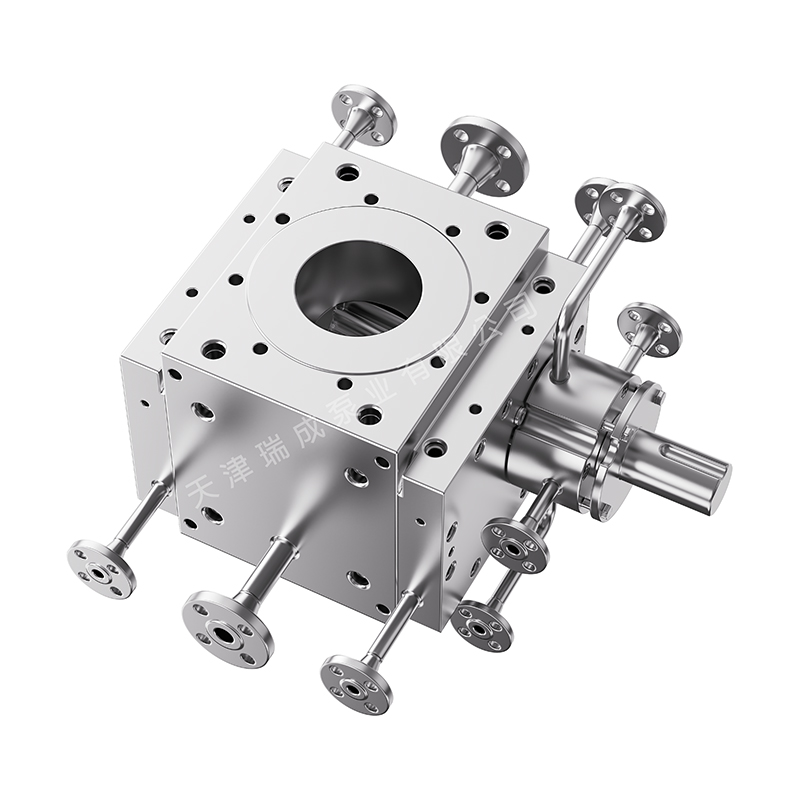
What is the function of a bottom discharge pump in PLA production? In polylactic acid manufacturing, the bottom discharge pump is mainly used to remove material from the reactor and transfer the melt to downstream processing equipment. For high-viscosity materials, vacuum conditions, or low liquid levels, the pump inlet structure and operating conditions must be properly configured to ensure adequate filling of the pump chamber.
The flow characteristics of PLA melt vary depending on the material grade and processing conditions. When selecting a pump, it is important to consider more than displacement and motor power. Reactor pressure, material viscosity, operating temperature, and required outlet pressure must also be evaluated. Under vacuum discharge conditions, inlet filling capacity directly affects pump performance.
The PLA bottom discharge pump can be installed at the bottom of the reactor using a flange connection, depending on the equipment design. A properly designed inlet passage helps reduce flow resistance and improve material filling around the gears. During installation, the reactor outlet flange and available space must also be considered to ensure that the inlet piping does not restrict material supply.
For PLA melts, thermal effects and material residence time are also important. The flow passage, gear structure, operating speed, and heating configuration should be selected according to the material characteristics. Simply increasing pump speed to achieve higher output is not sufficient; the inlet supply capacity must also be checked.
Different polymers have different requirements for materials and sealing systems. The configurations for PLA, PET, PBT, and PA should be evaluated according to the formulation, processing temperature, and actual operating conditions rather than applying the same design to every material.
For polymer bottom discharge pump applications, Tianjin Ruicheng Pump Industry Co., Ltd. evaluates material composition, target production capacity, inlet and outlet pressures, and installation conditions to determine a suitable pump configuration for each reactor discharge process.