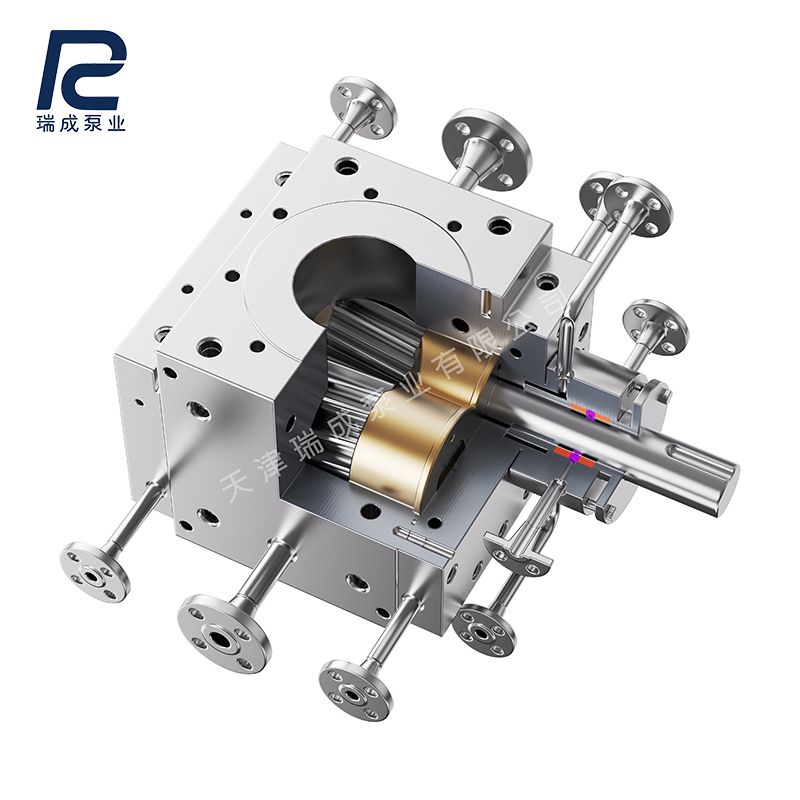
How do you select a reactor discharge pump? Material viscosity, pressure inside the reactor, operating temperature and downstream flow resistance must be considered when determining the pump displacement, inlet design, sealing arrangement and heating method. These factors help match the discharge capacity to production requirements.
In the production of polyesters, resins, adhesives and certain other polymers, the material may be highly viscous after the reaction. Relying solely on gravity or the available pressure differential can result in slow or intermittent discharge. Under vacuum conditions in particular, material feeding at the pump inlet can be limited. Pump selection should therefore consider not only motor power but also whether the material can adequately fill the pump cavities.
A reactor discharge pump uses rotating gears to continuously convey material to the outlet through the spaces between the gear teeth and the pump housing. It provides conveying pressure for downstream filtration, pelletizing or other processing stages. Actual flow depends on pump displacement, rotational speed, material viscosity and inlet filling conditions, and must be determined for the specific application.
For highly viscous materials, attention should be paid to the inlet passage and installation position to reduce inlet flow resistance. Where temperature maintenance is required, a suitable heating method can be selected according to the process. The materials used for the wetted housing, gears, bushings and seals should be selected with consideration of the material’s corrosiveness, abrasiveness and operating temperature.
Tianjin Ruicheng Pump Industry Co., Ltd. selects reactor discharge pumps and discusses equipment configurations based on actual operating conditions, including material properties, required throughput, reactor pressure and outlet pressure. Before startup, the pump should be thoroughly preheated and adequate inlet feeding confirmed. Temperature, pressure and rotational speed should be monitored during operation, and dry running must be avoided to help coordinate reactor discharge with downstream processes.