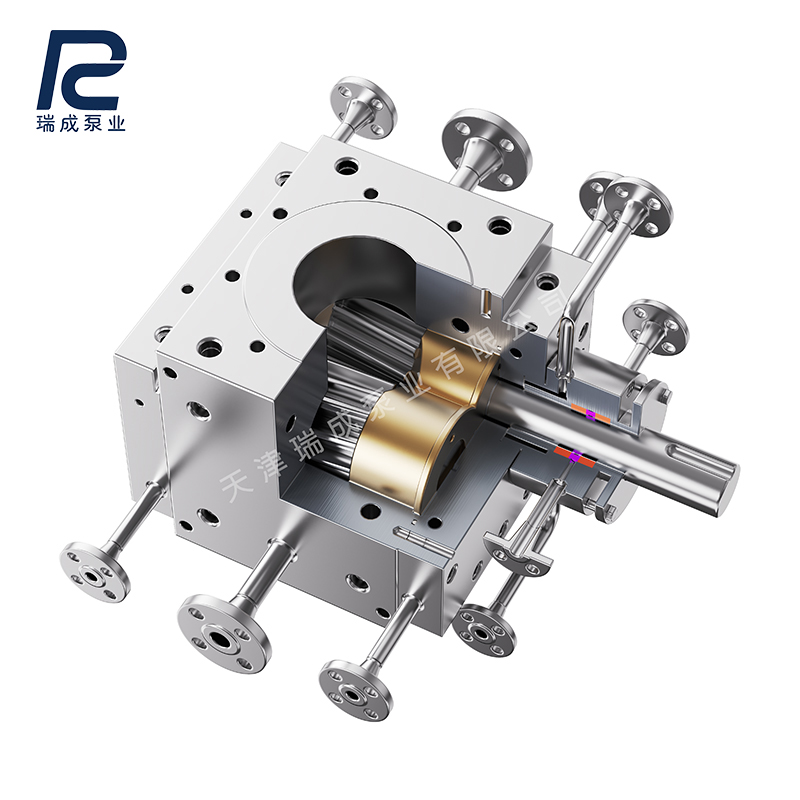
How do you select a reactor melt pump for an HDPE production line? When the pump is mounted directly beneath the reactor to discharge molten material, selection depends on the HDPE grade, melt viscosity, reactor pressure, and required throughput. The reactor outlet dimensions and on-site installation conditions should also be checked.
Melt flow behavior varies among grades of high-density polyethylene (HDPE). Pump selection requires data on the material composition, operating temperature, and melt viscosity at that temperature. The melt flow index can provide additional information about the grade’s flow behavior. If the material contains solvents, gas, or solid particles, assess their effects on pumping, seal performance, and component wear.
With the pump mounted directly at the reactor bottom, adequate inlet filling is essential. The inlet passage should be sized to suit the reactor pressure, operating melt level, and outlet connection dimensions. An appropriately designed inlet helps reduce flow resistance when the melt is highly viscous or the inlet pressure is low. If the discharge rate drops, check the inlet conditions before increasing pump speed.
Temperature also affects how readily HDPE melt flows. Heating and insulation around the pump housing and the reactor connection help limit the increase in flow resistance caused by local cooling. Preheat the pump and connection before startup, and account for temperature uniformity and melt residence time during operation.
Calculate pump displacement per revolution from the target throughput, melt density, and suitable operating speed. Determine the required discharge pressure from the resistance of downstream piping and filtration equipment. Then verify the drive torque, motor power, and seal configuration.
Tianjin Ruicheng Pump Industry Co., Ltd. selects reactor melt pumps for HDPE production lines based on material properties, reactor bottom connection dimensions, and operating conditions. The pumps support continuous reactor discharge and melt transfer.