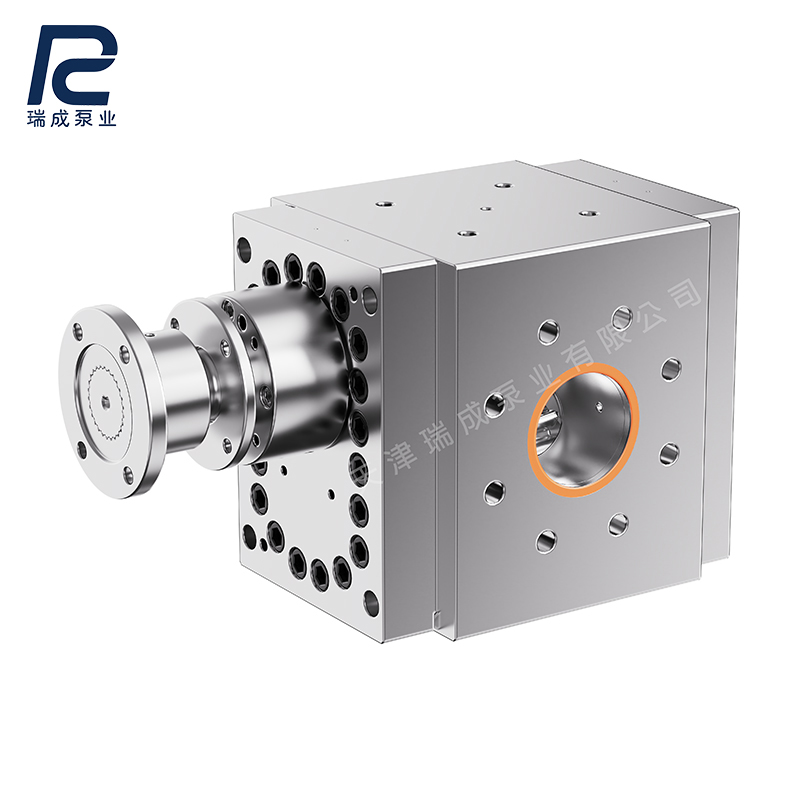
In the production process of cast films such as CPP, CPE, and TPU, after the polymer raw material is heated, sheared, and plasticized by an extruder, it must pass continuously through a filter, a screen changer, and a cast die, and is then cooled and set on cooling rolls. The entire production process imposes certain requirements on melt flow rate, pre-die pressure, and feed continuity.
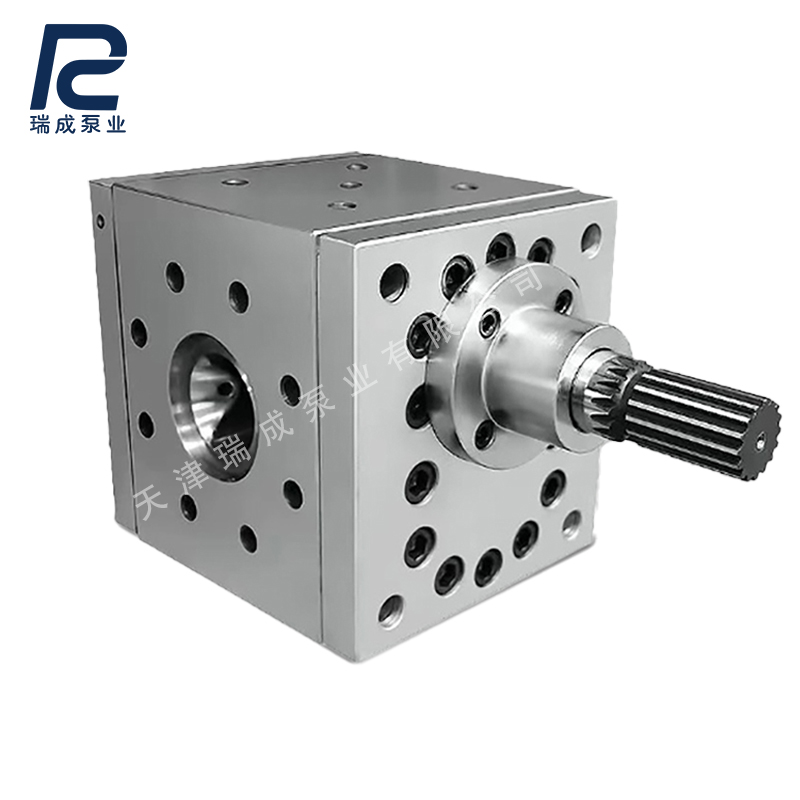
Due to factors such as the feed condition of the raw material, screw speed, melt temperature, material viscosity, and variations in filtration resistance, melt flow rate and outlet pressure may fluctuate when relying solely on the extruder for conveyance and pressure buildup. Melt metering pumps are typically installed between the extruder and the filtration system or cast die. By utilizing continuous gear meshing to create a positive displacement delivery mechanism, they provide relatively stable flow and pressure conditions for downstream processes.
I. Stabilizing Melt Delivery Flow Rate
Melt metering pumps have a well-defined displacement per revolution. Under conditions where the pump clearance, material viscosity, and operating pressure remain relatively stable, the actual delivery rate maintains a consistent relationship with the pump’s rotational speed. Therefore, the melt flow rate entering the cast film die can be controlled by adjusting the rotational speed of the metering pump.
Compared to relying solely on the extruder screw for conveyance, the use of a melt metering pump reduces the impact of feeding fluctuations, screw pulsations, and changes in material viscosity on the outlet flow rate. This ensures a more continuous feed to the die, supporting stable cast film production.
II. Stabilizing Die Inlet Pressure
Filters, screen changers, melt piping, and the cast film die in a cast film production line all generate a certain amount of flow resistance. As production time increases, impurities gradually accumulate on the filter screen surface, which may cause system resistance to fluctuate and, in turn, affect the pressure upstream of the die.
A melt metering pump can establish a pressure differential between the inlet and outlet sides, continuously pressurizing the melt delivered from upstream before feeding it into the die. By having the metering pump assume part of the pressure-building task, the impact of upstream pressure fluctuations on the die inlet is reduced, keeping the pressure upstream of the die relatively stable.
Stable pre-die pressure helps ensure uniform distribution of the melt within the die channels, reducing output irregularities, film surface fluctuations, and localized thickness variations caused by pressure fluctuations.
III. Reducing the Extruder’s Pressure-Building Burden
In traditional cast film extrusion systems, the extruder must not only plastify the raw material but also overcome the resistance generated by the filter, piping, and die. When downstream resistance is high, the extruder must build up higher pressure, which may affect screw plasticization, output stability, and equipment load.
After installing a melt metering pump, the extruder can focus more on melting, mixing, and continuously feeding the raw material, while the metering pump is primarily responsible for downstream pressurization and metered delivery. By controlling the pressure upstream of the pump, the extruder can operate under relatively stable conditions, reducing the interference of downstream pressure fluctuations on screw extrusion output.
For production lines equipped with fine filters, wide-width cast film dies, or multilayer co-extrusion systems, this division of labor facilitates separate adjustment of upstream plasticization conditions and downstream melt supply.
IV. Auxiliary Control of Cast Film Thickness
The thickness uniformity of cast film is related to factors such as die structure, melt temperature, pre-die pressure, take-up speed, cooling roller condition, and feed stability. Among these, the continuity of the melt flow entering the die is one of the key factors affecting longitudinal thickness variation.
By stabilizing the delivery rate, the melt metering pump can reduce film thickness variations caused by fluctuations in extrusion output during production. When combined with an automatic die, in-line thickness measurement, cooling roller temperature control, and a traction system, this provides relatively stable feed conditions for controlling film thickness, improving film surface flatness, and maintaining proper winding conditions.
In the production of multilayer co-extruded cast films, equipping each extrusion unit with a suitable metering device can also help control the feed ratios of different film layers, ensuring that the material for each layer enters the co-extrusion die according to process requirements.
V. Facilitating Production Parameter Adjustment and Interlocked Control
Melt metering pumps are typically used in conjunction with pressure sensors, variable-frequency motors, gear reducers, and production line control systems. The control system can adjust the extruder speed in response to changes in pressure upstream of the pump and control the melt flow rate entering the die by adjusting the metering pump speed.
This control method helps establish a coordinated relationship between extruder feeding, metering pump delivery, and die forming. When changes occur in raw material grade, film layer structure, product thickness, or production speed, the metering pump speed and related parameters can be adjusted based on melt viscosity, target output, operating pressure, and process temperature.
It should be noted that the melt metering pump is just one component of the cast film production system; film formation quality is also influenced by multiple factors, including raw materials, the extruder, the filtration system, the die, cooling, and take-up. Therefore, when selecting equipment, parameters such as material type, melt viscosity, production capacity, operating temperature, inlet pressure, outlet pressure, installation method, and interface dimensions should be comprehensively considered.
Tianjin Ruicheng Pump Industry Co., Ltd. can provide recommendations for melt metering pumps, drives, and control systems based on the actual operating conditions of cast film production lines, offering guidance for new production lines, equipment retrofits, and the configuration of related components.