In the production processes of resin synthesis, polymer reactions, chemical fiber raw materials, and hot-melt adhesives, after materials have undergone heating, mixing, or polymerization reactions, they typically need to be discharged from the bottom of the reactor and conveyed to downstream equipment such as filtration, pelletizing, spinning, coating, or storage systems. Such materials are typically characterized by high temperature, high viscosity, and a tendency to solidify upon cooling. Relying solely on gravity for discharge makes the process susceptible to fluctuations in the reactor’s liquid level, material flowability, and resistance in the downstream piping.
Reactor bottom pumps are typically installed at the bottom of the reactor and are primarily responsible for continuous discharge, melt pressurization, and flow rate regulation; they serve as a critical conveying device connecting the reactor to downstream production equipment.
I. Operating Principle of Reactor Bottom Pumps
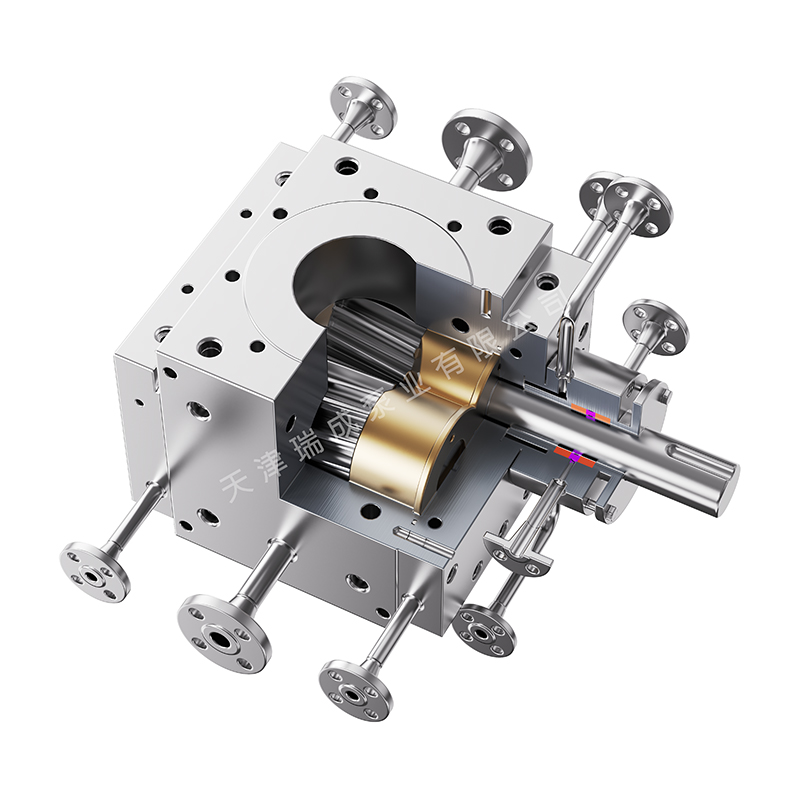
Reactor bottom pumps generally employ a positive-displacement gear-type conveying mechanism, primarily consisting of a pump body, drive gear, driven gear, drive shaft, driven shaft, shaft sleeve, end plates, sealing assembly, and heating device. During operation, the motor drives the drive gear to rotate via a reducer, causing the driven gear to rotate synchronously through gear meshing.
As the two gears gradually separate on the inlet side, the space within the tooth slots increases. Under the influence of the reactor liquid level pressure, vacuum pressure differential, or inlet pressure, the melt enters the pump chamber and fills the tooth slots between the gears and the pump body. As the gears rotate, the material is conveyed along the inner wall of the pump body from the inlet side to the outlet side. When the gears re-mesh on the outlet side, the material within the tooth slots is continuously extruded, thereby completing the melt conveyance process.
When the pump chamber is stably filled, each full rotation of the gears conveys a relatively fixed volume of material. Therefore, by adjusting the pump’s operating speed, the discharge flow rate can be regulated, providing relatively stable feed conditions for downstream production processes.
II. Improving Discharge Performance at Low Liquid Levels
Toward the end of production, as the liquid level in the reactor gradually decreases, the static pressure exerted by the material on the outlet also decreases. If the melt viscosity is high, relying solely on gravity for discharge can easily lead to reduced flow rates, intermittent discharge, or significant residual material remaining in the reactor.
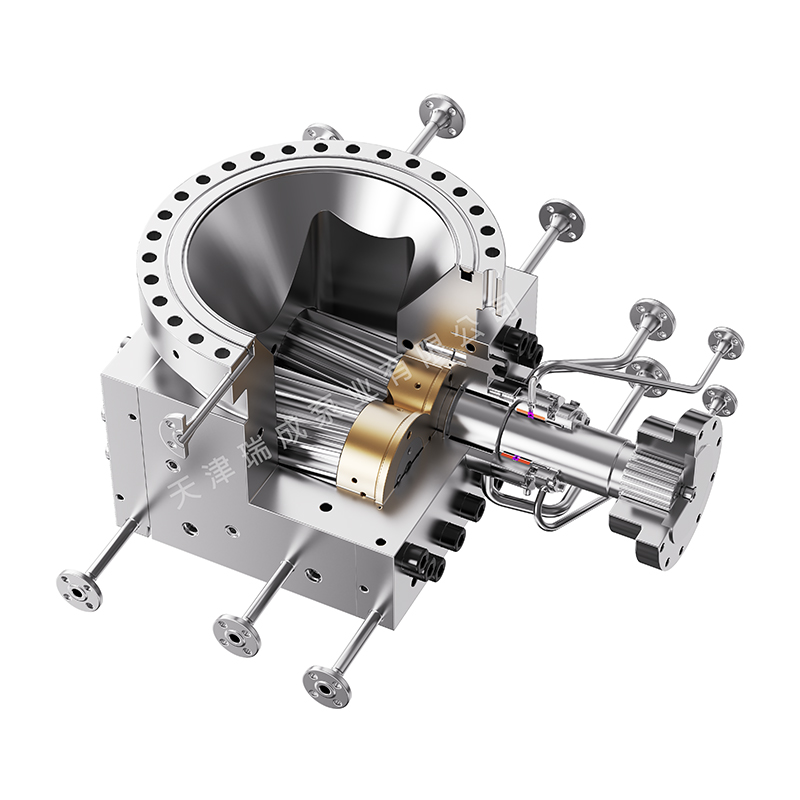
The reactor bottom pump can be designed—taking into account material viscosity, inlet pressure, and reactor bottom structure—to optimize the inlet size, internal flow channels, and gear parameters, thereby facilitating the entry of high-viscosity melts into the pump chamber. When the equipment is properly selected and inlet feeding is normal, this can improve discharge conditions under low liquid level or low inlet pressure conditions, thereby enhancing the continuity of the production process.
III. Stable Flow Rate and Delivery Pressure
The liquid level, temperature, and material viscosity inside the reactor change during the production process. These changes may affect the natural discharge flow rate and transmit pressure fluctuations to downstream equipment.
Reactor bottom pumps utilize a positive displacement delivery mechanism; under conditions of stable rotational speed and sufficient inlet filling, the output flow rate remains relatively uniform. At the same time, the pump body can generate a certain level of discharge pressure, enabling the melt to overcome flow resistance caused by filters, piping, valves, and die heads, thereby providing the necessary pressure and flow conditions for subsequent processes such as pelletizing, spinning, and coating.
IV. Suitable for Conveying High-Temperature, High-Viscosity Materials
To address the issue of high-temperature melts cooling and solidifying easily, reactor bottom pumps are typically equipped with heating systems. These systems maintain the pump body at an appropriate temperature before and during operation, reducing the likelihood of material solidifying within the pump chamber and flow passages.
Selection should be based on the material’s temperature, viscosity, corrosiveness, abrasiveness, and process requirements. Through proper design of gear clearance, internal flow paths, and seal configurations, localized material stagnation can be minimized, and the residence time of the melt within the pump can be controlled, making it suitable for the continuous discharge of resins, polyesters, polyamides, hot-melt adhesives, and other high-viscosity polymers.
V. Model Selection Should Be Based on Specific Production Parameters
The model of a reactor bottom pump cannot be determined solely based on pipe diameter or motor power. When selecting a model, it is necessary to comprehensively consider the material name, operating temperature, viscosity range, required flow rate, inlet pressure, outlet pressure, vacuum level inside the reactor, sealing requirements, and whether the material contains corrosive or abrasive components.
Tianjin Ruicheng Pump Industry can design customized solutions for reactor bottom pumps—including connection types, discharge capacity specifications, heating methods, sealing structures, drive systems, and control methods—based on the reactor’s structure and actual production parameters, thereby providing appropriate equipment solutions for reactor discharge and subsequent polymer conveyance processes.