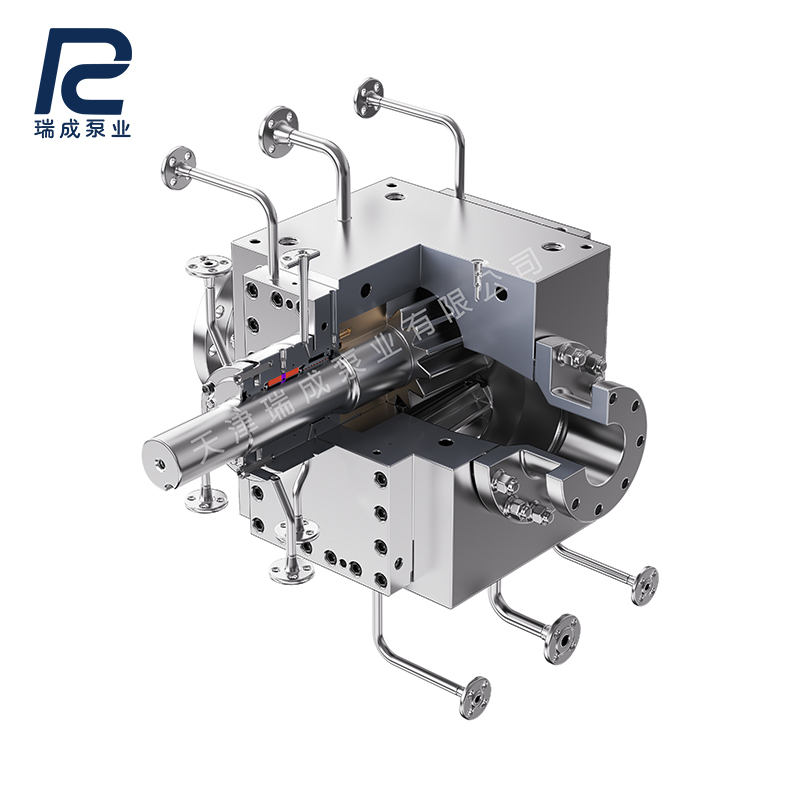
In plastic extrusion, modified pelletization, chemical fiber spinning, and polymer conveying processes, the melt must overcome flow resistance caused by filters, screen changers, piping, and die heads. Relying solely on the pressure generated by the extruder or reactor may result in insufficient outlet pressure and flow rate fluctuations. Melt booster pumps are typically installed between the extruder and the die, or within the melt delivery piping. They utilize continuous gear meshing to create a positive displacement flow, providing the necessary pressure and flow conditions for subsequent processes.
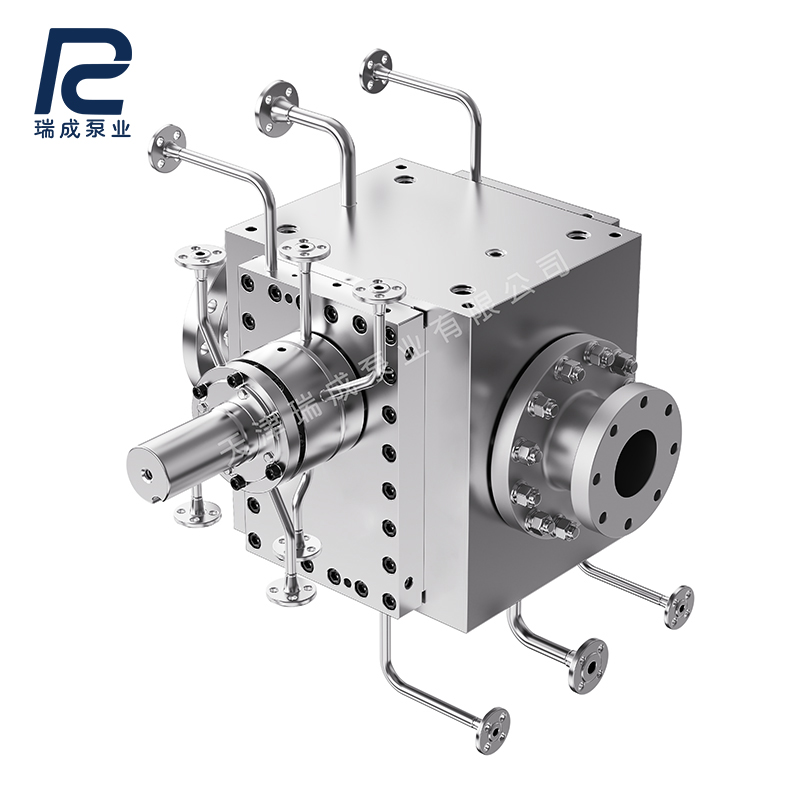
I. Increasing Melt Pressure
Pressure boosting is the primary function of a melt booster pump. High-temperature, high-viscosity melt requires a certain amount of thrust pressure when passing through filtration systems, long pipelines, or dies with narrow gaps. The booster pump utilizes the rotation of the drive gear and driven gear to draw material from the inlet side into the gear pockets and transport it along the pump chamber to the outlet side, thereby creating a pressure differential.
By appropriately separating the pressure-boosting task from the extruder, the extruder can focus more on plasticization, mixing, and degassing, helping to reduce the burden of establishing high pressure at the front end of the screw. For applications such as reactor discharge, polyester melt conveyance, and pipeline transport, booster pumps can also be used to compensate for pressure losses along the line, providing suitable pressure conditions for filtration, metering, and molding processes.
II. Stabilizing Pressure and Flow Rate
Fluctuations in extruder feed rate, screw speed, temperature, and screen changer resistance can all cause variations in melt pressure. Melt booster pumps are positive-displacement conveying devices; under conditions of stable rotational speed and sufficient inlet feed, they can convey a relatively fixed volume of material per revolution, thereby providing a certain degree of buffering against upstream pressure and flow rate fluctuations.
A relatively stable outlet pressure helps improve the feed conditions at the die inlet and reduces uneven extrusion output caused by pressure fluctuations. For continuous production processes such as film, sheet, pipe, fiber, and pelletizing, a stable melt flow rate helps control product thickness, dimensions, or output per unit time.
It should be noted that the actual pressure stabilization effect also depends on material viscosity, internal clearances within the pump, inlet pressure, operating temperature, and the drive system; therefore, appropriate pump selection and operating parameter settings must be determined based on specific operating conditions.
III. Achieving Metered Feed
The actual flow rate of a melt booster pump is related to the pump’s displacement, rotational speed, and volumetric efficiency. By adjusting the pump speed via a variable-frequency drive, a gearbox, and a control system, the melt output can be controlled within the equipment’s permissible operating range.
Compared to relying solely on the extruder screw for material conveyance, the use of a booster pump allows for the appropriate separation of material plastification and output control. The extruder is primarily responsible for melting, mixing, and plasticizing the material, while the pressure-boosting pump handles subsequent pressure boosting and metered delivery, enabling the production line to adjust the output flow rate according to process requirements.
The metered delivery function is particularly valuable in scenarios involving continuous feeding, synchronization with downstream haul-off speeds, or control of output per unit time. When integrated with inlet and outlet pressure sensors and temperature control systems, pump speed can be adjusted based on operating parameters, making the equipment’s operating status easier to monitor and manage.
Tianjin Ruicheng Pump Industry Co., Ltd. can provide recommendations for selecting and configuring melt booster pumps based on material type, operating temperature, melt viscosity, inlet pressure, outlet pressure, target flow rate, and installation method. During actual operation, avoid insufficient inlet feed, forced startup at low temperatures, and prolonged dry running. Additionally, regularly inspect seals, couplings, drive units, and heating systems to maintain the equipment in proper operating condition.