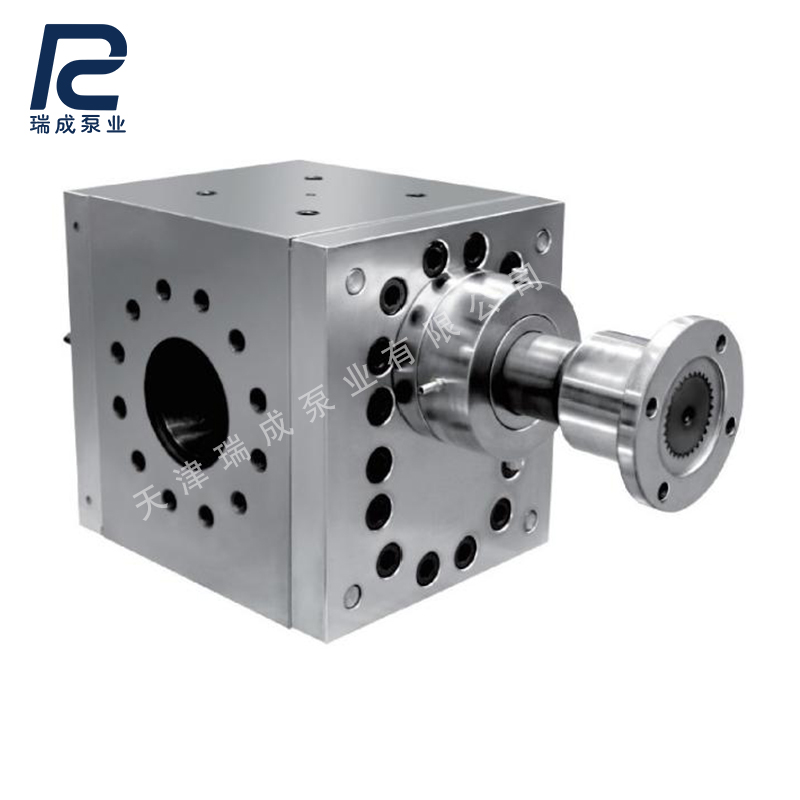
In applications such as plastic extrusion, hot melt adhesive coating, polymer melt conveyance, and reactor discharge, the continuous appearance of bubbles at the outlet of a melt gear metering pump is a critical operational indicator that warrants attention. While this may appear to be “bubbling” at the outlet, the root cause often lies not at the outlet but in factors such as inlet feeding, material condition, temperature control, and system sealing.
The operating principle of a melt gear metering pump relies on gear meshing to create a stable volume, continuously conveying high-temperature, high-viscosity materials to downstream equipment. Under normal conditions, the pump chamber should be fully filled with melt, and the outlet flow rate should remain relatively stable. If bubbles continuously appear at the outlet, it indicates that air may have entered the pump chamber, or that moisture, volatiles, or low-pressure voids in the material have been released following a pressure change. Therefore, one should not simply conclude that “the pump is broken,” nor should one blindly disassemble the pump for repair.
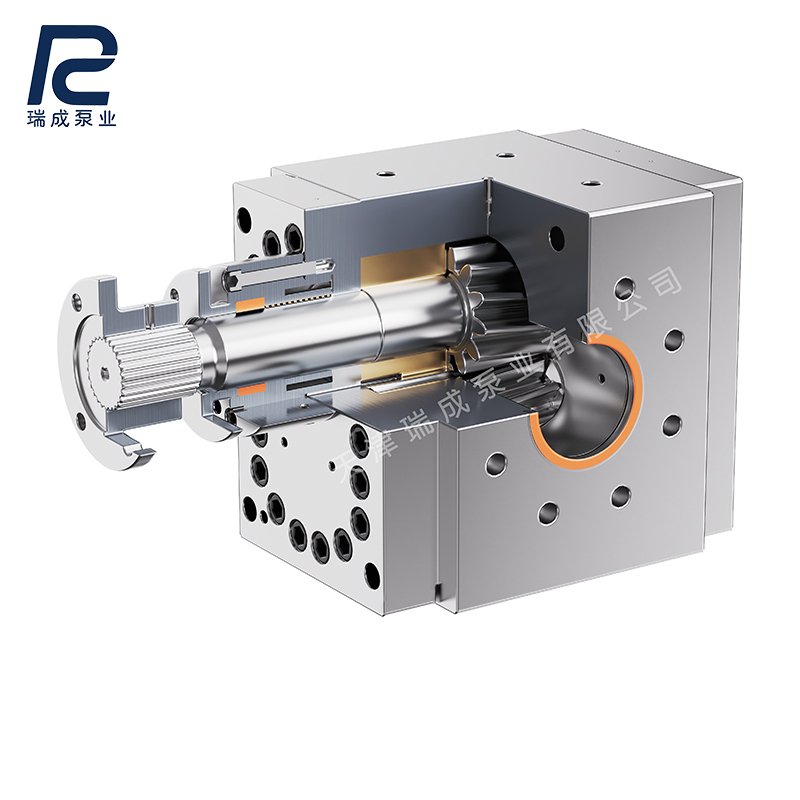
A relatively common cause is insufficient feed at the inlet. Although melt pumps serve to stabilize pressure, boost pressure, and deliver a metered flow, they are not designed to resolve severe feed shortages in the upstream process. Unstable extruder discharge, intermittent feed at the bottom of the reactor, excessive resistance in the inlet piping, or blockages upstream of the filter or screen changer can all lead to insufficient inlet pressure. When the pump chamber is not fully filled, localized cavitation is likely to occur, ultimately manifesting at the outlet as bubbles, flow fluctuations, unstable pressure, and even accompanied by slight abnormal noises.
Inadequate sealing at the inlet is also a major source of continuous bubbles at the outlet. Many operators only check the discharge pressure while neglecting the inlet flanges, gaskets, pipe joints, valve connections, and flexible couplings. In high-viscosity melt delivery systems, even a minute leak at the inlet can allow air to enter the pump chamber. Especially when inlet pressure is low or pipeline resistance is high, such “micro-air leaks” may not manifest as obvious material leakage but will form continuous fine bubbles at the discharge end.
Air or moisture inherent in the material itself can also cause similar phenomena. Recycled materials, hot melt adhesives, resin melts, or certain polymer materials may incorporate air or entrap moisture during heating, mixing, changeovers, or recycling and pelletizing processes. If upstream degassing is insufficient, the gas will gradually be released as the material enters the gear metering pump due to changes in pressure and temperature. At this point, the bubbles at the outlet are typically continuous and may affect the appearance of the finished product, such as air spots in films, uneven sheet surfaces, irregular pellets, or pinholes in coating layers.
Improper temperature control can also exacerbate the bubble problem. When the temperature is too low, melt viscosity increases, flowability decreases, and it becomes difficult to feed material into the inlet, leading to underfilling of the pump chamber; when the temperature is too high, moisture, volatiles, or certain low-molecular-weight components in the material may be released, forming bubbles. Therefore, when determining the cause of bubbles, one must not only check whether the pump body temperature has reached the set value but also ensure that temperatures are balanced between the extruder, filter, connecting piping, pump body, and die head. Localized undercooling or overheating can both affect the stability of melt delivery.
Furthermore, excessively high pump speeds or mismatched displacement ratings may also lead to bubbles at the outlet. In some production settings, operators directly increase the melt pump speed to boost output, but the upstream feeding capacity, material flowability, and inlet pressure are not simultaneously improved. The result is that while the pump speed increases, the melt cannot keep up, leading to underfilling of the pump chamber and, consequently, bubbles and pressure fluctuations at the outlet. When selecting a melt gear metering pump, one must not focus solely on flow rate but must also comprehensively consider material viscosity, operating temperature, inlet pressure, outlet pressure, pipeline resistance, and continuous operation requirements.
In its application services for melt gear metering pumps, Tianjin Ruicheng Pump Industry Co., Ltd. typically advises users encountering continuous bubbles at the outlet to troubleshoot systematically: first, confirm whether upstream material supply is continuous; then, check for air leaks in the inlet piping; then assess whether the material has been sufficiently dried, degassed, and plastified; and finally verify whether the pump’s displacement, speed, temperature, and pressure are properly matched. Only by analyzing the pump, material, piping, and process conditions as an integrated system can the true cause be identified.
Overall, continuous bubbling at the outlet of a melt gear metering pump is not merely a pump issue, but a reflection of the stability of the entire conveying system. For applications such as plastic extrusion, pelletizing, coating, hot melt adhesive, and high-viscosity melt conveying, stable inlet conditions, proper temperature control, and accurate pump selection are the keys to reducing bubbles, stabilizing pressure, and improving product consistency. Tianjin Ruicheng Pump Industry can provide users with selection support for melt pumps, gear metering pumps, and high-viscosity conveying solutions based on different material properties and on-site conditions, helping production lines achieve more stable and continuous operation.