In plastic extrusion, modified pelletization, sheet, film, pipe, hot melt adhesive, and high-viscosity polymer conveying processes, the stability of continuous production directly affects product quality and production efficiency. After operating for a period of time, many production lines experience issues such as fluctuating output rates, pipe pressure fluctuations, uneven die feeding, inconsistent pellet sizes, and variations in product thickness. On the surface, these issues may appear to be related to raw materials, temperature, molds, or traction systems; however, when analyzed from the perspective of melt conveyance, unstable pressure and flow are often key contributing factors. The role of a melt pipeline booster pump is precisely to enhance the continuity and controllability of downstream processes through pressure boosting, pressure stabilization, and metered delivery.
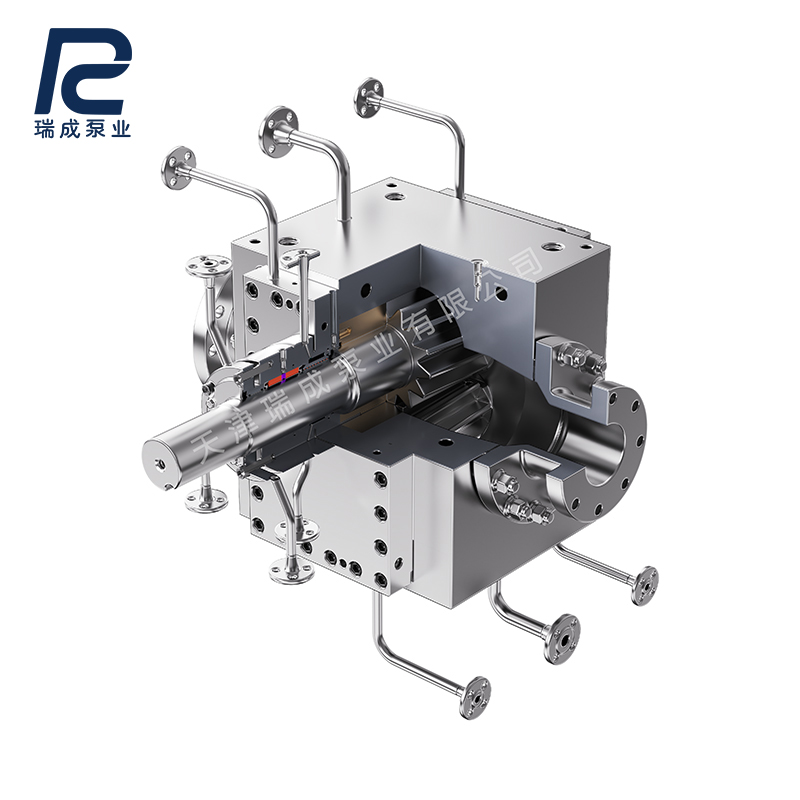
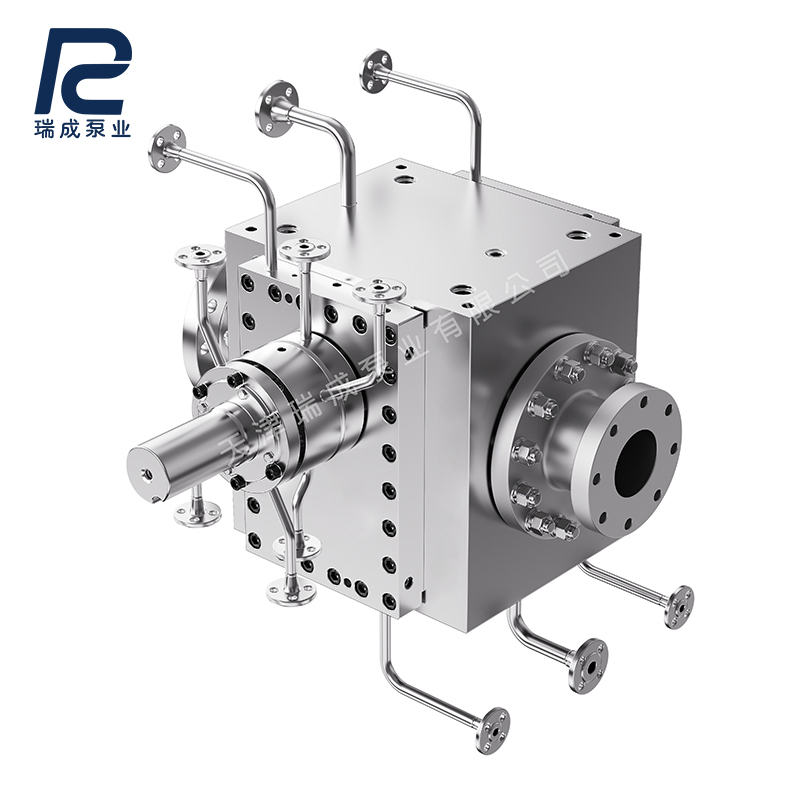
Melt pipeline booster pumps are typically used in scenarios involving the conveyance of high-temperature, high-viscosity, and high-pressure polymer melts. Their core structure typically employs a gear-type positive displacement principle, relying on gear meshing to form a relatively fixed conveying chamber that continuously transports the melt from the inlet to the outlet. Compared to relying solely on an extruder or upstream equipment to generate pressure, the relationship between output and rotational speed in a melt pipeline booster pump is more stable. Provided that the pump is properly selected and fed normally, it can maintain relatively stable outlet pressure and flow rate.
In continuous production, upstream operating conditions are rarely completely constant. For example, variations in raw material batches, fluctuations in the proportion of recycled material, changes in melt viscosity, increased filter resistance, uneven screw plasticization, and temperature control fluctuations can all cause fluctuations in melt pressure. If these fluctuations are directly transmitted to the die, pelletizing system, or downstream molding equipment, they can easily lead to unstable product quality. When installed in the appropriate location, a melt line booster pump can isolate upstream pressure fluctuations to some extent, providing the downstream section with a more continuous and uniform melt supply, thereby reducing the impact of unstable output on the product.
Another key way in which a melt line booster pump enhances stability is by optimizing pressure distribution across the entire production line. The extruder is primarily responsible for material plasticization, mixing, and initial conveyance, while the booster pump handles the tasks of building pressure, maintaining pressure, and ensuring metered delivery downstream. This prevents the extruder from operating under prolonged conditions of high backpressure fluctuations, reduces load variations on the main unit, and ensures smoother system operation. For continuous production lines such as sheet, film, pipe, and pelletizing, stable melt pressure helps maintain uniform die feed, reducing issues such as uneven thickness, inconsistent particle size, and pipe wall thickness deviations.
However, installing a melt line booster pump is not simply a matter of “adding a pump” to solve all problems. To truly ensure stable production, the pump must be selected appropriately based on material characteristics and on-site operating conditions. Key considerations during selection include material viscosity, operating temperature, inlet pressure, outlet pressure, target output, pipeline resistance, filter configuration, and heating methods. If the flow rate is too low, it may fail to meet production requirements; if it is too high, it may result in inefficient operation or even cause shear heating and abnormal pressure. Additionally, during operation, sufficient feed at the inlet must be ensured to prevent material shortages, dry running, and the entry of impurities into the pump chamber, as these issues can accelerate wear on components such as gears, bushings, and seals, thereby affecting long-term stable operation.
Tianjin Ruicheng Pump Industry Co., Ltd. has observed in the application of melt pipeline booster pumps and gear metering pumps that many customers’ production fluctuations are not caused by single equipment failures, but rather by improper pressure matching between upstream and downstream sections. For example, on a recycled plastic pelletizing production line, due to the complex composition of recycled materials, melt viscosity and filtration resistance frequently fluctuate, leading to uneven output and variations in pellet size at the pelletizing end. By installing RC series melt pipeline booster pumps at key points in the pipeline to provide stable pressure boosting and continuous conveyance of the melt, the feed conditions at the downstream end improved significantly. Production rhythms became more stable, and equipment operation was easier to control.
Therefore, the core of how melt pipeline booster pumps enhance the stability of continuous production lies not merely in “increasing pressure,” but in maintaining pressure, flow rate, and melt condition within a more controllable range. For high-temperature, high-viscosity, continuous production conditions, the proper configuration of melt pipeline booster pumps can mitigate conveying fluctuations, stabilize downstream material supply, reduce variations in the main machine’s load, and provide a more reliable process foundation for consistent product quality. Tianjin Ruicheng Pump Industry Co., Ltd. can provide recommendations on pump selection, flow rate matching, heating methods, and installation locations based on customers’ material characteristics, production requirements, and on-site piping conditions, helping users enhance the stability and operational efficiency of their continuous production processes.