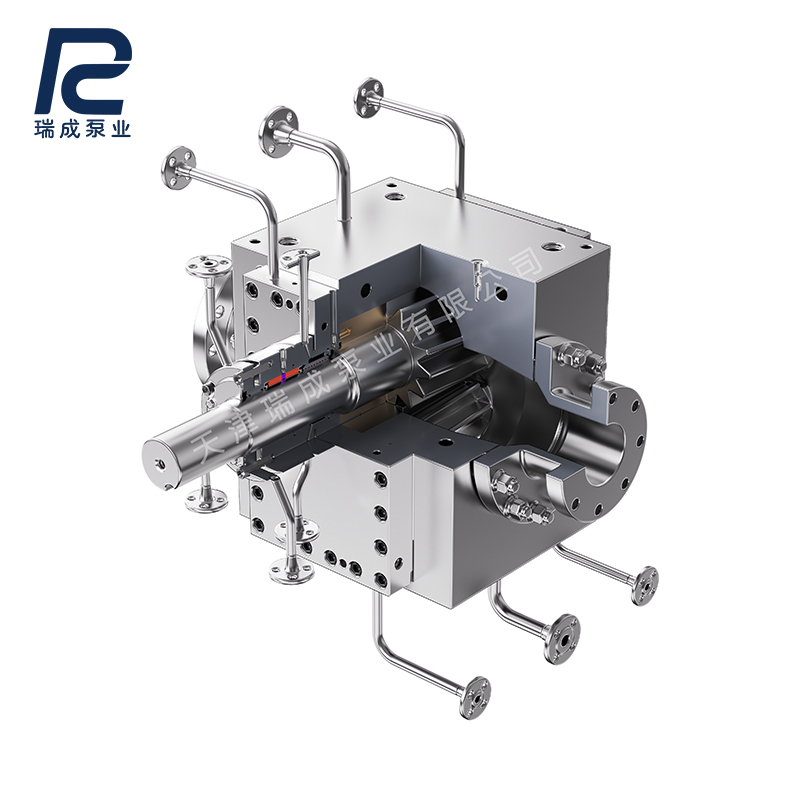
Excessive vibration is a common issue encountered during the operation of pipeline booster pumps. When faced with equipment vibration, many users’ first instinct is to check whether the unit is level, whether the anchor bolts are loose, and whether the foundation is secure. While installation issues can indeed cause vibration, they are not the only cause. If the problem is attributed solely to “poor installation,” key factors that truly affect the stable operation of the equipment may be overlooked.
Through the design and application of the RC series pipeline booster pumps, Tianjin Ruicheng Pump Industry Co., Ltd. has found that the operating condition of the booster pump is closely related to the characteristics of the medium, inlet conditions, pipeline layout, equipment wear, and the drive system. Pipeline booster pumps are typically used in applications involving high viscosity, high temperatures, or situations requiring stable pressure delivery. During operation, the equipment must not only withstand material resistance but also cope with factors such as pressure fluctuations, temperature changes, and pipeline stress. Therefore, vibration issues must be analyzed from a holistic system perspective.
First, special attention should be paid to inlet conditions. If inlet pressure is insufficient, upstream supply is intermittent, filters are clogged, or air is introduced into the piping, the material inside the pump chamber may not fill continuously. This can easily cause surges and pulsations during operation, leading to increased vibration. For high-viscosity materials, low temperatures that increase viscosity can also increase the pump’s operational load, causing abnormal vibration in the equipment.
Second, the piping system must not be overlooked. If inlet and outlet pipes lack adequate support, or if significant stress exists at the connection points between the pipes and the pump body, external forces may be transmitted to the pump. In such cases, even if the equipment itself is installed correctly, vibration, noise, or unstable pressure may occur during operation. It is particularly important to re-evaluate the rationality of the piping layout following production line modifications, equipment replacements, or adjustments to process parameters.
Furthermore, internal wear within the pump housing is another common cause. When pipeline booster pumps are used for continuous operation over extended periods, components such as gears, bushings, bearings, and seals will experience wear over time. If internal clearances increase, this can lead to increased backflow, pressure fluctuations, and mechanical shocks, thereby triggering vibration. Transmission issues such as misaligned couplings, abnormal motor bearings, or loose fasteners can further amplify vibration.
Therefore, excessive vibration in a pipeline booster pump cannot be simply attributed to installation issues. Tianjin Ruicheng Pump Industry Co., Ltd. recommends that on-site troubleshooting should involve a systematic analysis of the installation foundation, inlet conditions, pipeline stress, medium temperature, internal wear, and the drive system. Only by identifying the true cause can the operational stability of the pipeline booster pump be improved, ensuring continuous and smooth operation of the production line.