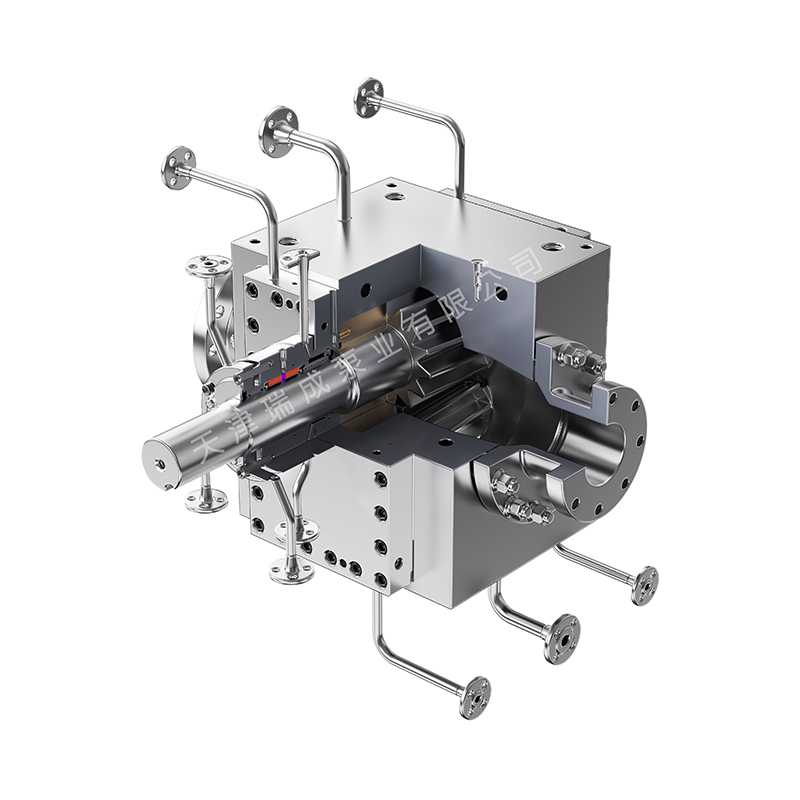
In applications involving the conveyance of high-viscosity materials, polymer processing, and continuous production systems, pipeline booster pumps are commonly used to increase pipeline pressure, stabilize flow rates, and improve material supply to downstream equipment. Many users have a common misconception when selecting a pump: will choosing a larger displacement ensure safer operation in the long run? In actual operating conditions, however, pipeline booster pumps do not necessarily perform more stably with a larger displacement, nor are larger models inherently safer. Proper selection is the key to ensuring stable equipment operation.
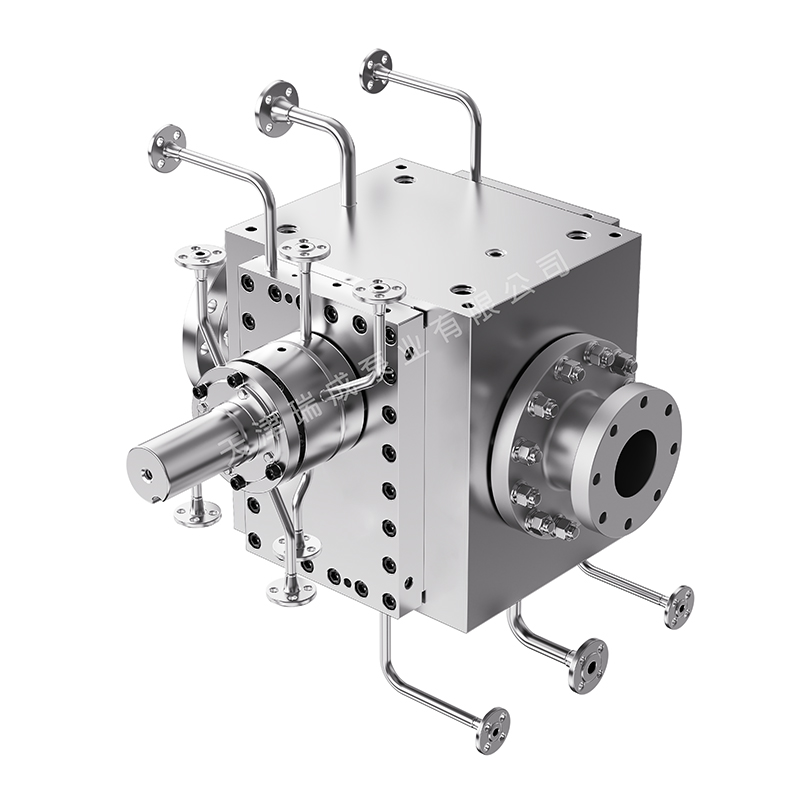
The displacement of a pipeline booster pump must typically be determined by comprehensively evaluating factors such as material properties, process flow rate, pipeline resistance, inlet and outlet pressures, temperature, viscosity, and motor power. If one focuses solely on “building in a margin” and blindly selects an excessively large displacement, it may introduce new operational risks. This is particularly true during the conveyance of high-viscosity materials. If the pump’s displacement is too large, the conveyance volume per unit time increases; if the upstream feed is insufficient, issues such as inadequate suction, flow fluctuations, and unstable pressure are likely to occur, which in turn can disrupt the continuity of the entire production line.
Additionally, pipeline booster pumps with excessively high displacement may need to reduce their speed during operation to match actual output. While low-speed operation can help reduce wear to some extent, prolonged deviation from the optimal operating range may lead to reduced metering accuracy, sluggish system response, and even excessive outlet pressure, increased pipeline load, and greater stress on seals and bearings. For temperature-sensitive or shear-sensitive materials, excessive conveying capacity may also cause material stagnation, backflow, or abnormal stress conditions, thereby affecting product quality.
The correct approach to selection should be to determine a reasonable flow rate based on actual production line requirements, rather than simply scaling up the specifications. Users need to clearly define parameters such as hourly output, material viscosity, operating temperature, inlet pressure, outlet pressure, pipeline length, number of elbows, and pressure requirements of downstream equipment, and then match these with the pump’s speed range, drive power, and structural materials. Only by keeping the pipeline booster pump within its appropriate operating range can stable pressurization, continuous conveyance, and a longer service life be achieved.
Therefore, selecting a larger displacement for a pipeline booster pump does not necessarily equate to greater safety. If the flow rate is too low, it may fail to meet output and pressure requirements; conversely, an excessively high flow rate may lead to issues with equipment load, control accuracy, and system stability. Ruicheng Pump Industry recommends that users provide as complete a set of operating parameters as possible before selection. Professional staff will then evaluate these parameters in conjunction with on-site processes to select a pipeline booster pump solution that truly meets the production line’s needs, ensuring more stable equipment operation and a more worry-free production process.