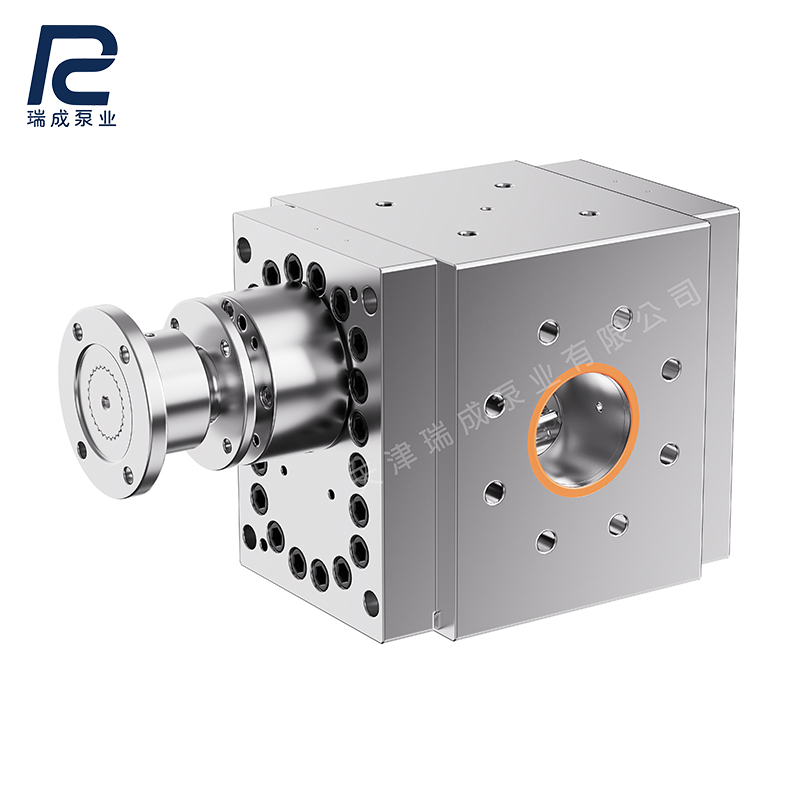
In the plastic film extrusion process, uneven thickness is a common quality issue, and melt pumps play a crucial role in stabilizing melt pressure and ensuring uniform material delivery. When investigating uneven film thickness, many companies tend to focus primarily on factors such as die gap, take-off speed, cooling air rings, and raw material formulations. However, the stability of melt pressure also directly affects the quality of the film. In continuous extrusion processes, any fluctuation in melt pressure causes the material flow entering the die to vary. This ultimately manifests on the film surface as localized thickening or thinning, transverse thickness variations, or unstable web tension.
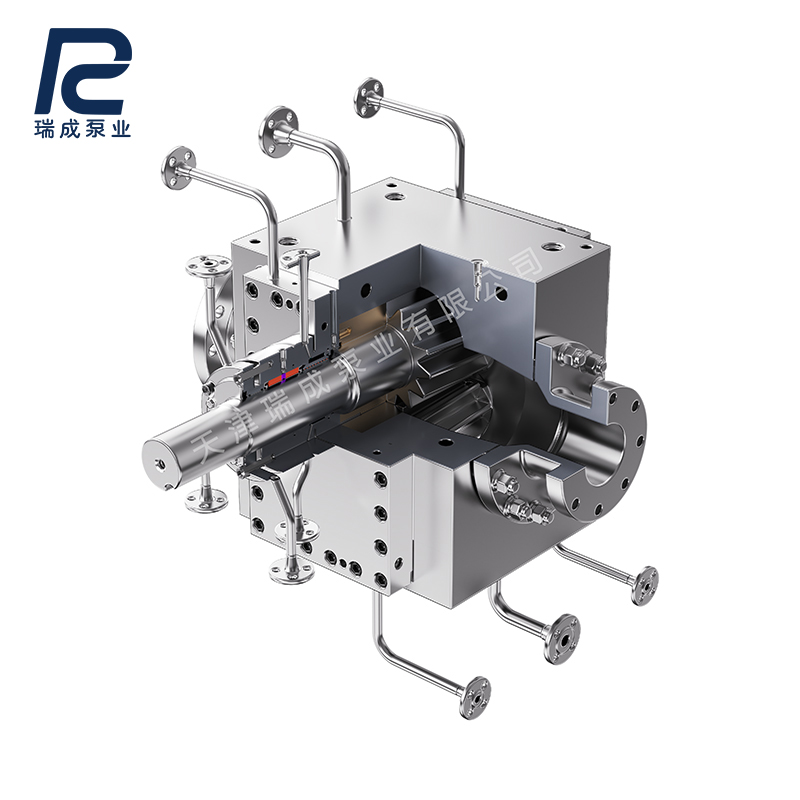
During extruder operation, discharge pressure is not entirely constant due to factors such as screw speed, feed uniformity, raw material melt state, filtration resistance, and temperature fluctuations. This is particularly evident when processing recycled materials, modified materials, highly filled materials, or high-viscosity materials, where changes in melt state are more pronounced and pressure fluctuations are more easily transmitted to the die end. When the pressure at the front of the die fluctuates, it becomes difficult to maintain a consistent speed and flow rate of the melt through the die, naturally leading to fluctuations in film thickness.
The role of the melt pump in a film extrusion system is precisely to ensure stable, continuous, and metered delivery of the melt. It is typically installed between the extruder and the die head, utilizing precision gear meshing to create a relatively stable positive displacement delivery process. On one hand, the melt pump mitigates the impact of pressure pulsations at the extruder end on the downstream die head; on the other hand, it provides the die head with a more consistent melt pressure and flow rate, making the film forming process more stable.
For film manufacturers, stabilizing melt pressure is not merely about ensuring “smoother extrusion”; more importantly, it enhances product consistency. Once melt flow is stabilized, film thickness control becomes easier, and the surface quality of the finished product, winding flatness, and stability of subsequent processing are correspondingly improved. Especially in the production of packaging films, functional films, sheet films, and composite films—where thickness precision is critical—pressure stability is often one of the key factors affecting product yield rates.
The RC series melt pumps manufactured by Tianjin Ruicheng Pump Industry Co., Ltd. are suitable for polymer material processing applications such as plastic extrusion, film, sheet, pipe, and pellet production. They can be selected and configured based on material viscosity, temperature, output, pressure, and on-site operating conditions. For production lines experiencing issues such as uneven film thickness, die pressure fluctuations, or unstable output, it is recommended to conduct a systematic analysis based on actual process parameters. By appropriately configuring melt pumps and related control solutions, melt delivery stability can be enhanced at the source, providing a more reliable guarantee for film quality and production continuity.