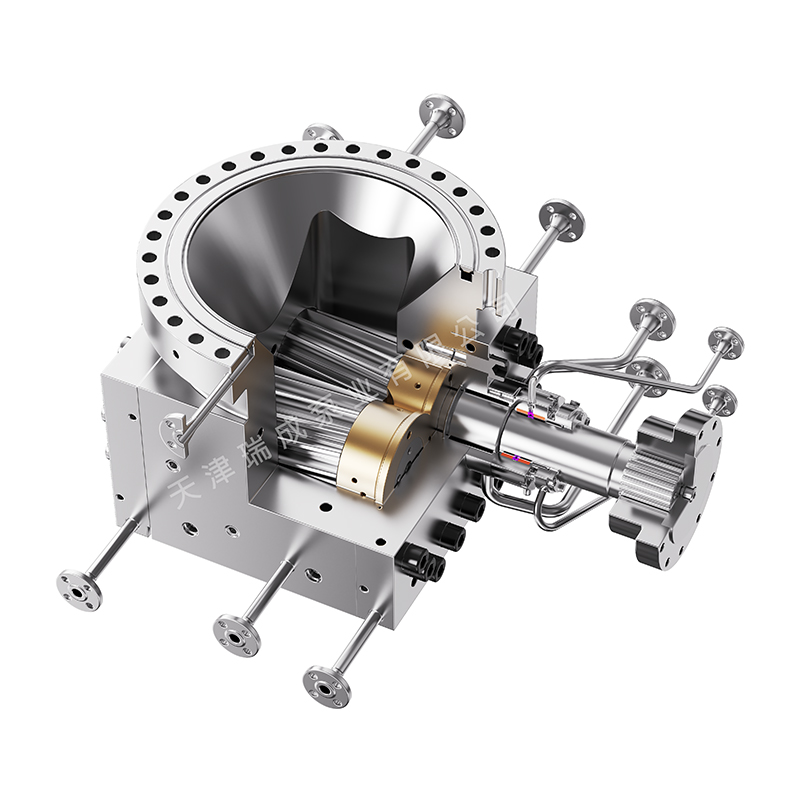
During the production of hot-melt adhesives, the material is typically heated, mixed and reacted within a reactor, before being conveyed to filtration, filling or coating equipment. As hot-melt adhesives have a high viscosity, their flow characteristics are easily affected by temperature, the liquid level within the reactor and pipeline resistance; relying solely on gravity flow may result in reduced discharge rates and fluctuations in conveying pressure. A bottom-discharge pump, installed at the base of the reactor, provides the necessary drive for subsequent conveyance.
I. Suitable for Conveying High-Viscosity Materials
Hot-melt adhesives exhibit flowability at certain temperatures; however, compared to ordinary liquids, they still present significant conveyance resistance. As the liquid level within the reactor drops, the inlet pressure generated by gravity flow gradually decreases, which can easily lead to intermittent feeding.
The bottom-discharge pump utilises a positive displacement conveying principle. As the gears rotate, the material enters the gear pockets and is conveyed along the interior of the pump housing to the outlet. By appropriately controlling the pump speed, a relatively stable discharge rate can be maintained under conditions of low liquid level and high viscosity, thereby minimising the impact of fluctuations in the reactor’s liquid level on the conveying process.
II. Bottom Installation Shortens the Feed Path
The bottom-discharge pump connects to the base of the reactor via a flange, allowing the material to enter the pump chamber directly from the reactor bottom. A shorter feed path helps to minimise inlet resistance and also reduces material stagnation within long pipework.
For hot-melt adhesives with high viscosity and poor flowability, the pump inlet must be designed taking into account the reactor bottom connection, material viscosity and discharge rate. A smooth inlet design improves feeding conditions within the pump chamber, reducing the likelihood of dry running or flow fluctuations caused by insufficient feed.
III. Providing Conveyance Pressure for Downstream Equipment
After being discharged from the reactor, the hot-melt adhesive may need to pass through filters, insulated pipework, valves and filling equipment. The length of the pipework, the number of bends and the filtration precision all create a certain degree of resistance.
A bottom-discharge pump is capable of establishing the required pressure on the outlet side to propel the material through subsequent equipment. By adjusting the pump’s rotational speed, the output per unit time can also be altered, ensuring better coordination between the reactor discharge and the filtration, filling or coating processes.
IV. Installation of Insulation or Heating Systems
Temperature fluctuations directly affect the viscosity and flow characteristics of hot-melt adhesive. At lower temperatures, the viscosity of the material increases, placing a greater operational load on the pump. Consequently, the pump housing is typically fitted with electric or thermal oil heating systems, whilst the connecting flanges and delivery pipework are insulated.
Heating systems are primarily used to maintain the temperature of the material within the pump chamber, thereby reducing solidification and flow resistance caused by localised cooling. During actual operation, heating parameters should be set according to the process temperature of the adhesive to prevent unsuitable temperatures from affecting the material’s state.
V. Sealing Structures Must Be Adapted to Actual Operating Conditions
As hot-melt adhesives are transported at a certain temperature and viscosity, shaft-end seals must balance leak prevention, high-temperature operation and routine maintenance. An inappropriate choice of sealing structure may result in material seepage from the shaft end, external air entering the pump chamber or difficulties in cleaning.
The type of seal should be selected based on operating temperature, inlet pressure, outlet pressure, material viscosity and continuous operating time. For applications involving high viscosity or requiring a high degree of sealing integrity, a combined sealing solution may be adopted, whilst ensuring sufficient space is provided for cleaning and maintenance.
VI. Facilitating Adjustment to Production Rhythms
Bottom-discharge pumps for reaction vessels can be used in conjunction with motors, gearboxes, couplings and control systems. By adjusting the pump speed via a variable-frequency drive, the flow rate can be tailored to the discharge volume of the reaction vessel and the requirements of downstream equipment. The pump speed should not be set excessively high; it should be determined reasonably in consideration of the material’s viscosity, inlet feed conditions and the target flow rate.
When selecting a hot-melt adhesive bottom-discharge pump, it is necessary to confirm the material name, operating viscosity, process temperature, hourly discharge rate, inlet and outlet pressures, reactor bottom connection, heating method and sealing requirements. Tianjin Ruicheng Pump Industry can provide a tailored design for the pump’s inlet, displacement, material, seals and drive configuration, taking into account the reactor structure and actual conveying conditions, thereby offering guidance on pump selection for hot-melt adhesive discharge and subsequent conveyance.