Once resins, polymers, hot-melt adhesives and chemical fibre raw materials have undergone reaction, mixing or polymerisation, they need to be transferred from the bottom of the reactor to the next process stage. Whilst ordinary, low-viscosity liquids can flow out under their own weight, the discharge of high-viscosity materials is not as smooth. Particularly under conditions such as vacuum or low liquid levels, the discharge rate tends to slow down, causing fluctuations in flow rate, and a significant amount of material may remain at the bottom of the reactor.
To ensure the material is discharged smoothly, a bottom-mounted pump can be fitted to the reactor to actively feed the material into the downstream pipework and provide the necessary pressure for subsequent conveyance.
Why is it difficult to discharge high-viscosity materials?
When the viscosity of a material is high, it encounters greater resistance to flow within the pipework. As the liquid level in the reactor continues to drop, the rate at which the material is discharged by gravity gradually slows down. Discharge becomes even more difficult when the transfer pipework is long, contains numerous bends, or is connected to downstream equipment such as filters or heat exchangers.
Some polymerisation reactions must be carried out under vacuum; when the feed to the pump inlet is insufficient, this can easily lead to fluctuations in flow rate and equipment vibration. Even enlarging the bottom discharge port of the reactor merely improves the conditions under which the material enters the pipeline; sufficient power is still required for subsequent conveyance.
How does a bottom-mounted pump convey material?
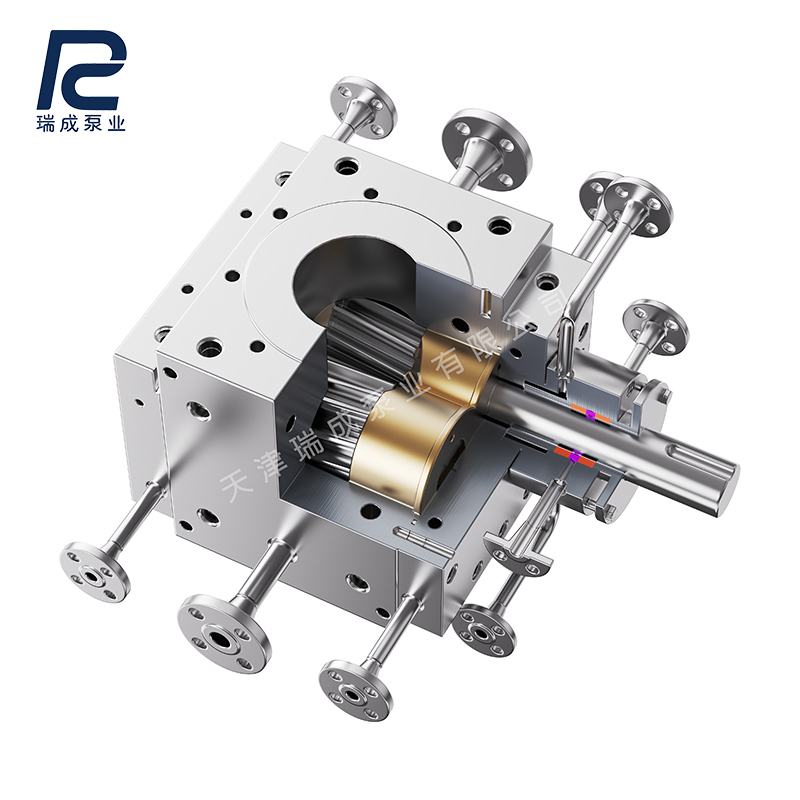
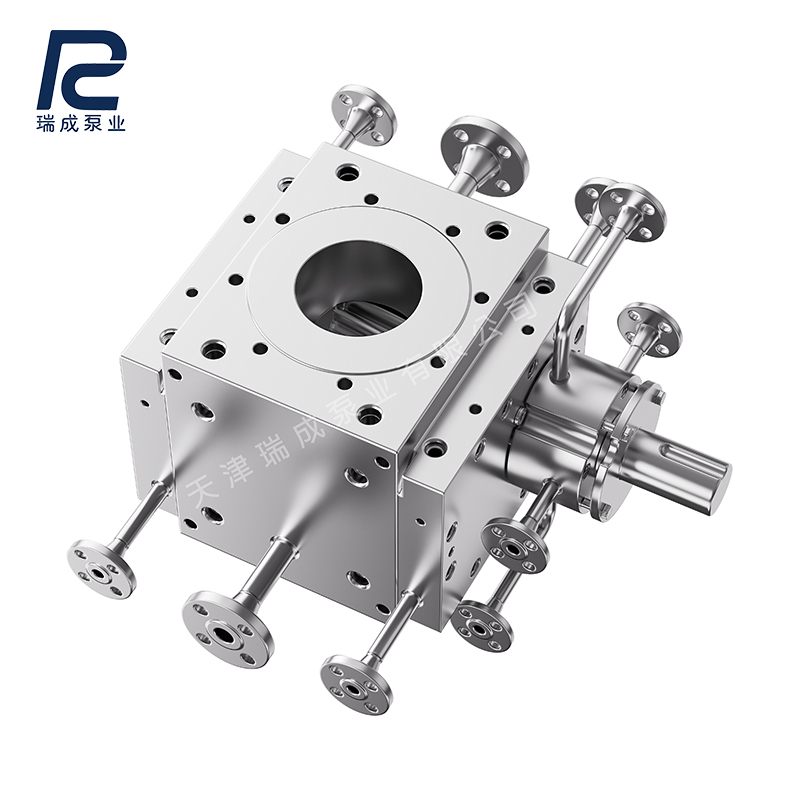
Bottom-mounted pumps are generally installed directly beneath the reactor. Their inlet features a large connecting flange, and the flow path from the reactor to the pump chamber is kept as short as possible to allow high-viscosity materials to enter the pump more smoothly.
The interior of the pump consists of a pair of meshing gears. As the gears rotate, the material enters the gear teeth and is carried from the inlet to the outlet along the inner wall of the pump chamber. As the gears continue to rotate, the material is delivered into the downstream pipework. Bottom-mounted pumps are positive-displacement conveyance equipment; under relatively stable operating conditions, there is a definite correlation between the output flow rate and rotational speed, allowing the discharge rate to be adjusted via variable frequency control.
What are the benefits of installing a bottom-mounted pump?
Once a bottom-of-reactor pump is installed, high-viscosity materials no longer rely solely on gravity for discharge. Even as the liquid level inside the reactor gradually decreases, the pump can continue to convey the material into the downstream pipework. When faced with long pipework, bends or filtration equipment, the bottom-of-reactor pump can also provide the necessary pressure for conveyance, preventing the discharge rate from slowing progressively.
Where continuous feeding or controlled discharge rates are required during production, the flow rate can be adjusted by varying the pump’s rotational speed, ensuring that the reactor and downstream equipment maintain a suitable feeding rhythm. As the inlet of the bottom-mounted pump is directly connected to the reactor vessel, the flow path is short, which also reduces material retention at the bottom of the reactor and at the connection points, facilitating product changeovers and cleaning.
What parameters should be considered when selecting a pump?
When selecting a bottom-mounted pump, one must not focus solely on the pipe diameter; consideration must also be given to parameters such as the material name, operating temperature, viscosity, flow rate, inlet vacuum level, outlet pressure and whether the material contains particles. The pump body material, gear structure, bearing fit, seal type and heating method should also be determined based on actual operating conditions.
Tianjin Ruicheng Pump Industry can provide tailored designs for the displacement, connection dimensions, drive method and temperature control configuration of bottom-of-reactor pumps, taking into account the reactor structure and material transfer requirements, thereby offering equipment selection guidance for the discharge and conveyance of resins, polymers, hot-melt adhesives and chemical materials.