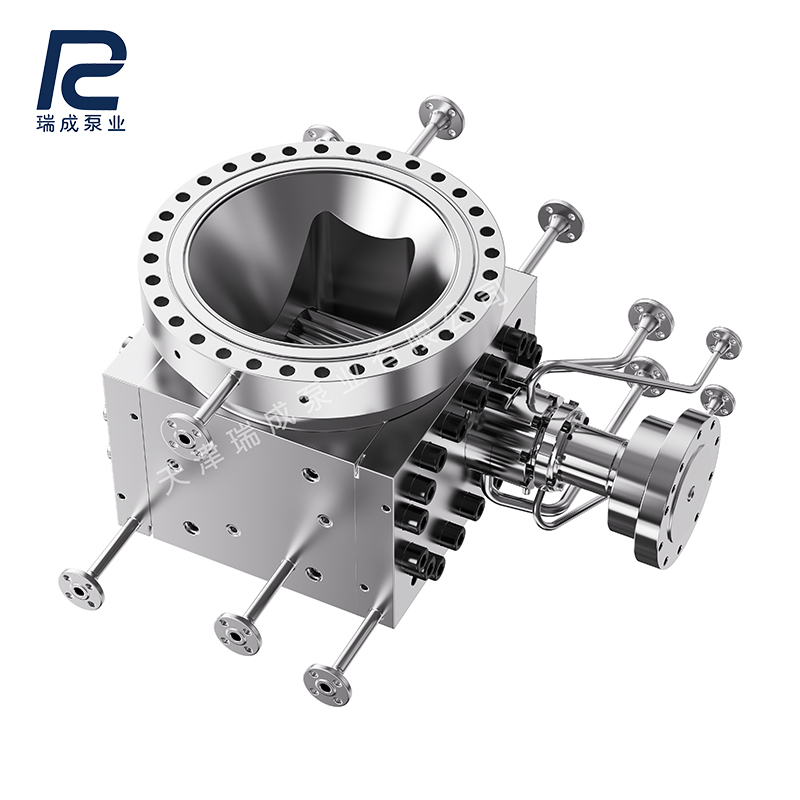
In fields such as chemical engineering, new materials, and polymer production, reactors serve as critical equipment for material polymerization, modification, and reactions; their discharge process directly impacts the stable operation of subsequent production stages. As production processes continue to evolve, an increasing number of high-temperature, high-viscosity, and high-pressure materials need to be reliably discharged from reactors and conveyed to downstream filtration, pelletizing, extrusion, or molding equipment. For these specialized operating conditions, bottom-discharge pumps have gradually become essential components in reactor discharge systems due to their stable conveyance, pressure control capabilities, and adaptability to complex media.
I. Main Application Areas of Bottom-Discharge Pumps
Bottom-discharge pumps are typically installed at the bottom of a reactor or along the discharge pipeline and are primarily used for the continuous conveyance of high-temperature, high-viscosity melts and polymer media. Unlike ordinary transfer pumps, bottom-discharge pumps must cope with process characteristics such as high material temperatures, high flow resistance, and significant pressure fluctuations; therefore, they have higher requirements in terms of structural design and material selection.
In the field of polymer production, bottom-discharge pumps can be applied in production processes for polyester, polyamide, polycarbonate, engineering plastics, and other materials, ensuring the stable discharge of molten material from the reactor. For example, after a polymerization reaction is complete, the melt must be pressurized and conveyed to filtration, pelletizing, or subsequent processing equipment; bottom-discharge pumps help maintain continuous operation of the production system.
In the chemical industry, during the production of certain resins, adhesives, polymer materials, and modified materials, the materials typically have high viscosity and may be at high temperatures. Bottom-discharge pumps can provide stable conveying pressure according to process requirements, ensuring the material enters the next process step at the set flow rate.
Furthermore, in the production of new materials, composite materials, and specialty polymers, where material properties vary significantly, higher demands are placed on equipment in terms of temperature resistance, sealing performance, and operational stability; bottom-discharge pumps are also widely used in these production lines.
II. Operational Characteristics of Bottom-Discharge Pumps
1. Suitable for Conveying High-Viscosity Melts
High-viscosity materials are prone to flow resistance during conveyance, and ordinary centrifugal pumps often struggle to meet stable conveyance requirements. Bottom-discharge pumps utilize a positive-displacement conveying principle, achieving material transfer through changes in the pump chamber’s volume, and can accommodate melt media across a wide range of viscosities.
During production, the pump’s conveying capacity is primarily influenced by factors such as displacement, rotational speed, and system pressure. Through proper selection, these pumps can meet stable feed requirements under varying production output demands.
2. Providing Stable Pressure Output
During reactor discharge, system pressure may fluctuate due to changes in material state, production pace, and filtration resistance. Through its stable positive-displacement delivery method, the bottom-discharge pump minimizes the impact of pressure fluctuations on downstream equipment, providing a relatively stable material supply to devices such as filters and extruders.
For production processes that are sensitive to pressure changes, stable pressure output helps improve process control and enhance the coordination of production line operations.
3. Meeting High-Temperature Operating Requirements
Many polymers and chemical media must remain in a fluid state at high temperatures; therefore, bottom-of-reactor pumps must possess excellent high-temperature adaptability. The equipment typically employs methods such as thermal oil or electric heating to maintain temperature, enabling the pump body and internal flow passages to withstand the high-temperature melt-conveyance environment.
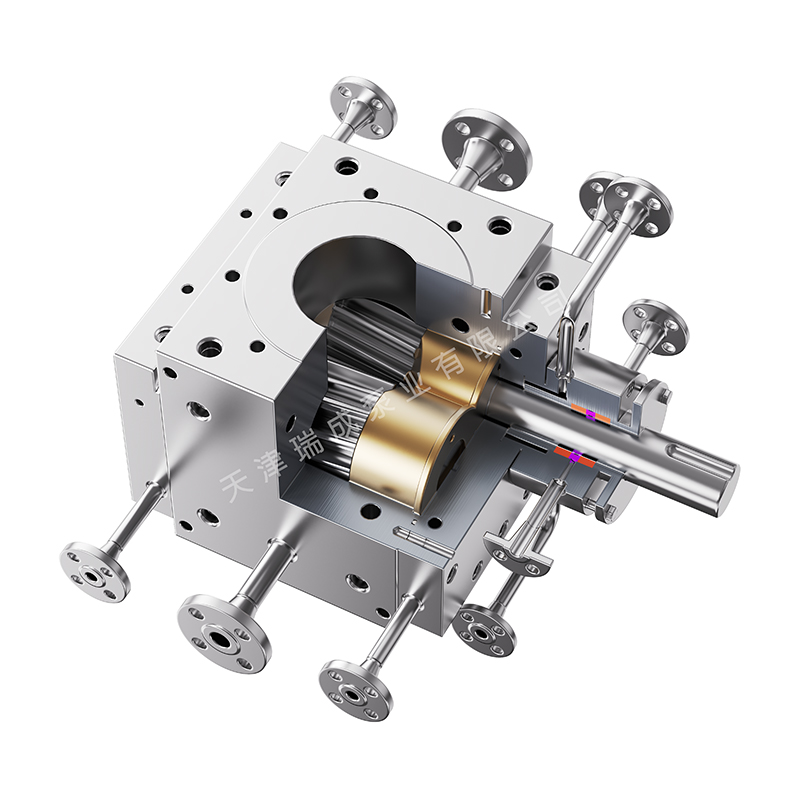
Additionally, depending on the characteristics of different media, the pump body, gears, shaft sleeves, and sealing structures can be made from various materials to meet requirements for wear resistance, corrosion resistance, and long-term operation.
4. Suitable for Complex Production Environments
Certain reactor processes involve low inlet pressure, materials containing fillers, or fluctuating viscosity, which place demands on the pump’s self-priming capability, sealing performance, and operational reliability. During the design phase, bottom-discharge pumps undergo structural optimization tailored to specific operating conditions—including gear configuration, bearing types, sealing methods, and heating mechanisms—to ensure the equipment is better suited to actual production needs.
III. Features of Tianjin Ruicheng Pump Industry’s Reactor Bottom Discharge Pumps
Tianjin Ruicheng Pump Industry has developed reactor bottom discharge pumps for use in the discharge stage of reactors, specifically designed to meet the needs of conveying high-temperature, high-viscosity polymers and chemical materials. The equipment employs a precision gear structure to achieve continuous material discharge through a stable positive displacement method.
The product can be custom-designed according to the customer’s production process, including the matching of parameters such as flow rate, pressure, temperature, connection types, and drive methods. For different application scenarios, heating structures can be configured and combined with different material selections to improve the compatibility of the equipment with the production medium.
In practical applications, the bottom-discharge pump not only handles material transfer but also assists the production system in pressure regulation and stable material supply, providing equipment support for subsequent processes such as filtration, extrusion, and pelletizing.
IV. Conclusion
With the development of the chemical, new materials, and polymer processing industries, production processes are placing increasingly higher demands on the stability of material conveyance. As a critical component of reactor systems, bottom-discharge pumps must be selected appropriately based on material properties, production pressure, temperature conditions, and production capacity requirements.
Tianjin Ruicheng Pump Industry can provide bottom-discharge pumps and corresponding solutions tailored to customers’ specific operating conditions, helping them achieve stable conveyance of high-temperature, high-viscosity materials and offering reliable equipment support for polymer production, chemical processing, and new materials manufacturing.