In the production of plastics, resins, rubber, synthetic fibers, hot-melt adhesives, and polymer materials, the inability to convey high-viscosity media is a common problem encountered in many production settings. This issue may manifest as insufficient pipeline pressure, slow material flow, intermittent downstream material supply, or even unstable die-head discharge, pressure drop after filtration, and difficulties in long-distance pipeline conveyance. When encountering such issues, one should not simply assume that “the pump is undersized” or “the motor power is insufficient.” Instead, a comprehensive analysis should be conducted, taking into account material viscosity, temperature control, pipeline resistance, filtration pressure drop, and downstream process requirements.
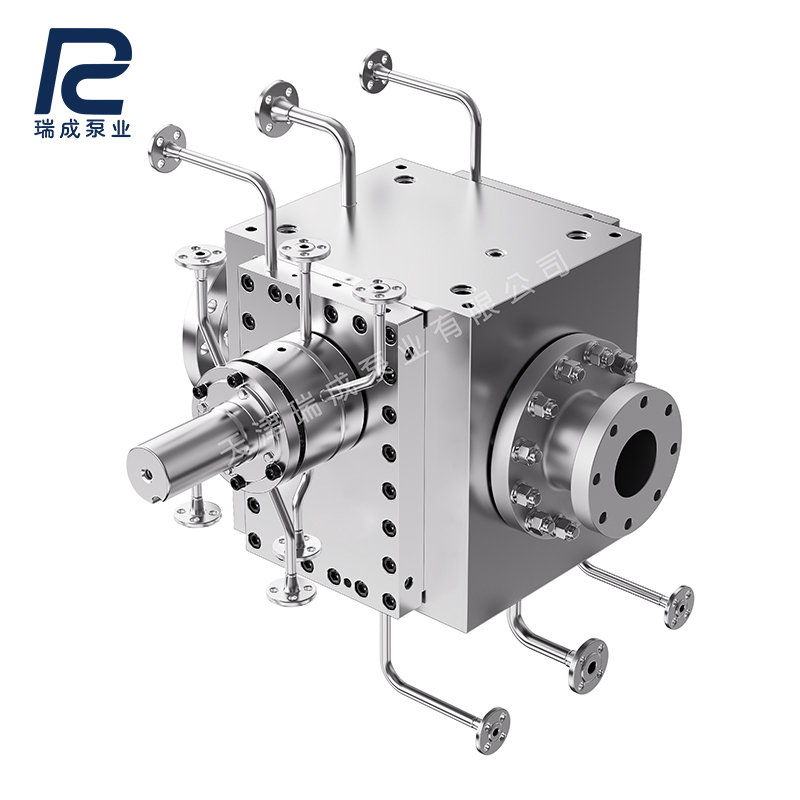
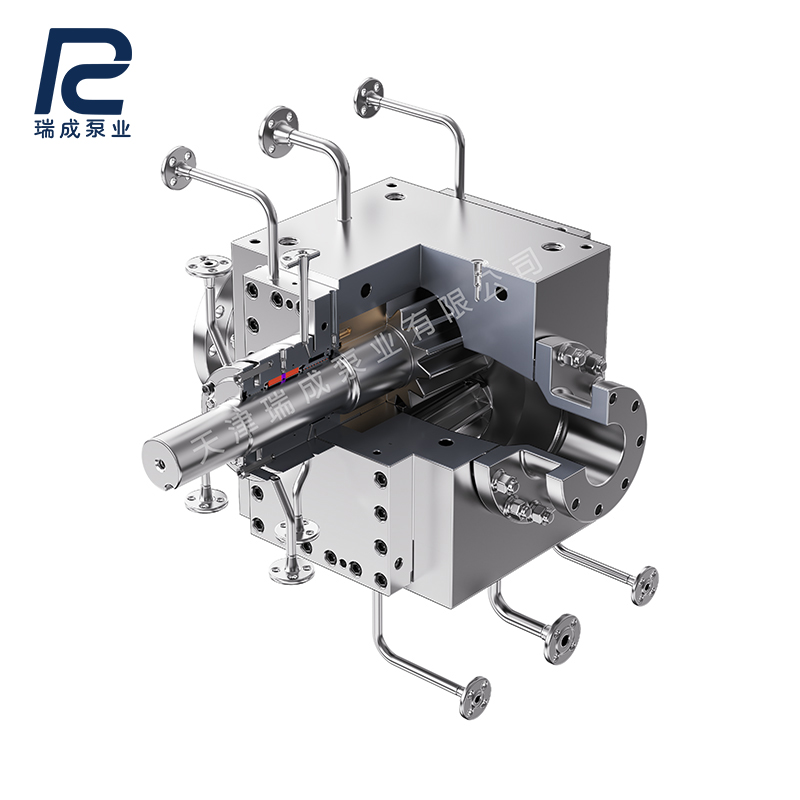
Melt line booster pumps primarily address the issue of excessive pressure loss in the piping system. High-viscosity materials inherently face significant resistance when flowing through pipes; this resistance increases further when the material passes through elbows, filters, screen changers, valves, or long conveying lines. When the pressure provided by the front-end equipment cannot meet the demands of the back-end, material conveyance becomes difficult. Melt line booster pumps are typically installed at critical points in the melt pipeline; by providing stable pressure boost, they enhance the material’s ability to flow through the pipeline and into the back-end equipment.
Secondly, they can address issues of unstable material supply to the back-end. In many production lines, while front-end equipment operates normally, the pressure drops significantly by the time the material passes through filtration, screen changing, or long-distance conveyance and enters the die head, reaction system, or molding equipment. In such cases, without stable pressure-boosting equipment, downstream flow rates are prone to fluctuations, directly affecting product quality. As a positive-displacement conveying device, the melt line booster pump can stabilize pressure and flow under appropriate operating conditions, thereby reducing the impact of front-end fluctuations on downstream processes.
Third, melt pipeline booster pumps are well-suited for addressing the challenges of continuous conveying high-viscosity materials. For materials such as PET, PA, PP, PE, ABS, PS, rubber compounds, resins, and certain liquid adhesives, the higher the material viscosity, the greater the requirements for stable conveying pressure and temperature. By creating a relatively stable conveying chamber through gear meshing, the melt pipeline booster pump enables continuous forward conveying of the material under specific pressure conditions, thereby helping to improve the continuity of production line operations.
However, it is important to note that melt pipeline booster pumps are not a universal solution. If the material temperature is too low, viscosity increases abnormally, or if the pipeline is already blocked, the pressure differential across the filter screen is too high, or upstream material supply is insufficient, relying solely on a booster pump will not completely resolve the issue. On the contrary, forcibly increasing the rotational speed under conditions of insufficient feed may lead to increased equipment load and accelerated wear, thereby shortening the pump’s service life. Therefore, before selecting a model, it is essential to clearly define the material name, operating temperature, viscosity range, flow rate requirements, inlet and outlet pressures, pipeline length, and installation location.
Taking some of the polymer material clients served by Tianjin Ruicheng Pump Industry Co., Ltd. as an example, in projects involving PE diaphragm production, plastic pelletizing, and high-viscosity melt conveyance, the common issue faced by clients is not that the equipment is completely inoperable, but rather that significant pressure loss occurs after the material passes through filtration, screen changes, or long pipelines, resulting in insufficient feed stability at the downstream end. For such operating conditions, Ruicheng Pump Industry typically matches customers with an RC series melt pipeline booster pump solution based on on-site temperature, viscosity, pressure, flow rate, and installation space, to address issues such as insufficient pressure, flow fluctuations, and difficulties in pipeline conveyance.
Overall, when high-viscosity media fail to flow, melt pipeline booster pumps primarily address issues of pressure supplementation, pressure stabilization, flow stabilization, and long-distance conveyance. Only by properly configuring the booster pump under conditions where temperature, viscosity, pressure, and feed conditions are well-matched can it truly fulfill its role in high-viscosity media conveyance systems.