During the hot-melt adhesive pelletizing process, the material is typically in a high-temperature molten state, characterized by high viscosity, flow properties that are significantly affected by temperature, and strict requirements for pressure and flow stability. The pelletizing stage not only requires continuous material conveyance but also demands that the melt state be as stable as possible before entering the die or pelletizing system. If plasticization and conveyance rely solely on the extruder, output stability is easily affected by factors such as screw speed, changes in material viscosity, variations in filtration resistance, and temperature fluctuations. This can lead to issues such as uneven output, pressure fluctuations, inconsistent pellet sizes, and stringing or breakage.
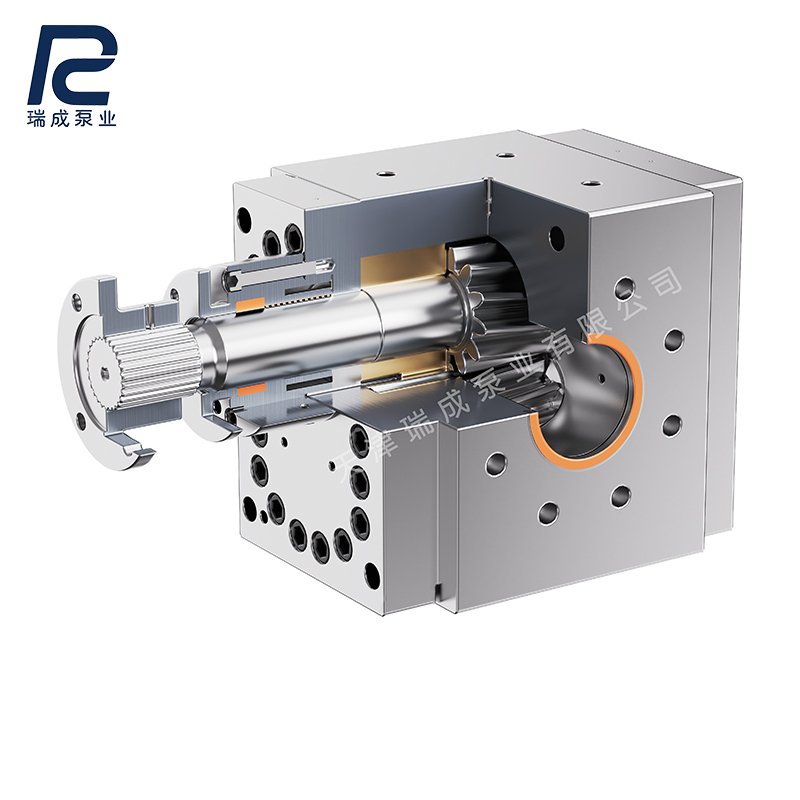
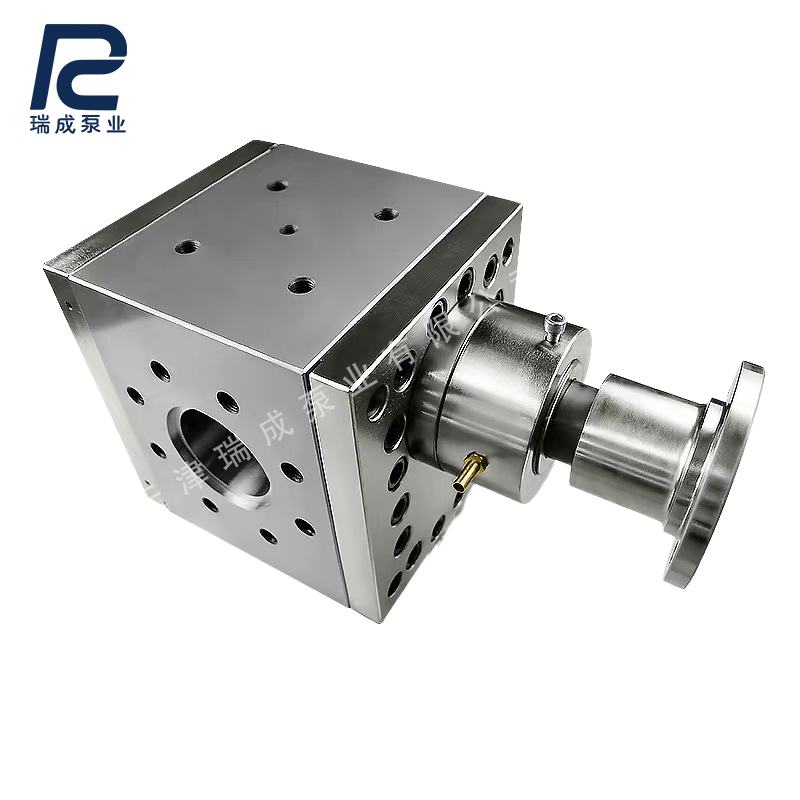
In such operating conditions, the strategic installation of a melt pump can provide stable conveying, auxiliary pressurization, and metered feeding for hot-melt adhesive pelletizing production lines. Melt pumps are typically installed downstream of the extruder and upstream of the die head or pelletizing system. They utilize a positive displacement gear conveying principle, where meshing gears form a relatively stable conveying chamber, enabling the continuous output of molten material at a set speed. It should be noted that the effectiveness of a melt pump is closely related to material properties, temperature control, upstream feeding conditions, pump specifications, and system pressure matching. Only when the pump is properly selected and the process is well-matched can it function optimally.
First, installing a melt pump helps improve the stability of the output flow rate. Hot melt adhesive materials have high viscosity; when feed fluctuations occur at the extruder, the output at the rear end may vary accordingly. As a metered conveying device, the melt pump can mitigate the impact of upstream fluctuations on downstream output within a certain range, making the melt output more continuous and uniform, which helps improve pellet size consistency and pelletizing stability.
Second, melt pumps help stabilize system pressure. During hot melt granulation, the stability of die pressure directly affects the shape of the extrudate and the quality of the granules. Installing a melt pump creates a relatively stable pressure regulation point between the extruder and the die, reducing the impact of fluctuating pressure on downstream processes and thereby lowering the likelihood of issues such as strand breakage, stringing, and sticking.
Third, melt pumps help improve production continuity. Stable flow rates and pressure reduce the frequency with which operators need to adjust equipment parameters, lowering the risk of downtime and rework caused by fluctuations in operating conditions. Additionally, for hot melt adhesives with different formulations and viscosity ranges, a properly selected melt pump can enhance the production line’s adaptability to changing operating conditions.
The RC series melt pumps manufactured by Tianjin Ruicheng Pump Industry Co., Ltd. can be configured based on the material viscosity, temperature, output, pressure, installation space, and control requirements specific to hot melt adhesive pelletizing operations. For hot melt adhesive pelletizing production lines, installing a melt pump is not merely a matter of adding conveying equipment; rather, it is a critical configuration that, based on process compatibility, improves melt conveying stability, enhances pellet quality consistency, and boosts the continuous operation capability of the entire line.