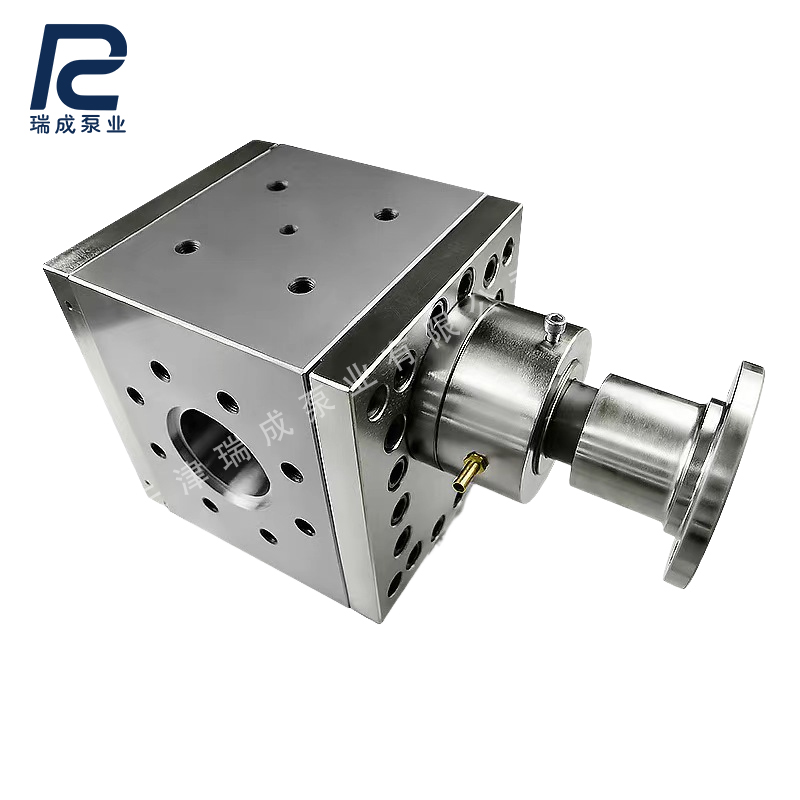
Melt pumps are the core components of an extrusion production line; selecting the appropriate model directly impacts output stability, equipment lifespan, and product quality. It is recommended to consider the following five factors comprehensively.
1. Material Compatibility
Glass fiber/fillers (e.g., reinforced nylon, PP+glass fiber): Select wear-resistant tool steel or hard coatings to prevent rapid wear of the gears and housing.
Corrosive materials (e.g., PVC, flame-retardant systems): Select stainless steel to resist corrosion from acidic decomposition products.
Heat-sensitive materials (e.g., PVC, PGA): The pump body’s flow channels must be smooth and free of dead corners, and a zone-controlled jacket heating system should be used to prevent localized overheating that leads to carbonization and blockages.
II. Displacement and Pressure
Displacement: It is recommended to allow a 20% margin above normal production capacity. Insufficient flow rate leads to excessive rotational speed and overheating due to material shear; excessive flow rate causes significant pressure fluctuations at low rotational speeds.
Pressure Rating: For conventional extrusion molding (tubing, sheet, blown film, pelletizing), select 10–25 MPa; for filament spinning, precision injection molding, or high-pressure die heads, select heavy-duty models rated at ≥35 MPa, and ensure that gears and bearings are upgraded accordingly.
III. Installation Configuration
Bottom-discharge: An extended pump body with a heating jacket must be selected, and alignment requirements under thermal expansion must be considered to prevent jamming or leakage.
Pipe pressurization: Verify that flange standards (e.g., DIN, ANSI) and bolt hole spacing match the existing production line; it is recommended to reserve a pressure sensor interface for closed-loop control.
IV. Sealing Methods
Spiral Seal: Suitable for high-temperature, high-viscosity materials; minimal leakage during operation, but limited sealing effectiveness during startup; not suitable for frequent start-stop cycles.
Packing Seal: Simple structure and low cost, but with trace leakage; suitable for low-pressure applications or situations where maintenance is convenient.
Mechanical Seal: Excellent sealing performance, but complex structure and high maintenance costs; selected only when strict prevention of gas ingress is required or when the medium is highly toxic or hazardous.
V. Easily Overlooked Details
Inlet Diameter: It is recommended that the inlet diameter be no smaller than the outlet diameter. An inlet that is too small can lead to insufficient feed, causing pump body vibration or “cavitation.” Drive Configuration: For high-viscosity materials or cold start conditions, a low-speed, high-torque motor paired with a gearbox of an appropriate speed ratio is required to prevent motor overload and tripping.
Temperature Consistency: The pump body heating method (heating rods, cast aluminum heaters, or jacket heating) should match the temperature range of the extruder and die head to prevent material from solidifying or degrading inside the pump chamber.
Summary: Pump selection should comprehensively consider material properties, process parameters, installation configuration, and sealing requirements, with particular emphasis on adequate inlet feed and drive compatibility. Tianjin Ruicheng Pump Industry Co., Ltd. recommends collaborating with the melt pump manufacturer to verify operating parameters to avoid unreasonable configurations such as “small pump at high speed” or “large pump at low pressure.”