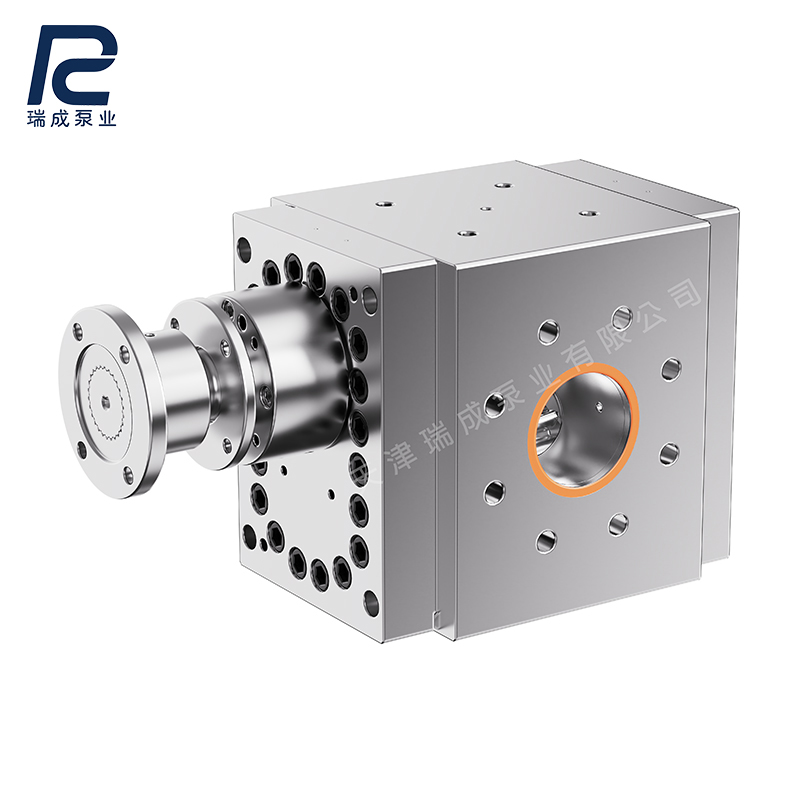
The fundamental cause of a melt pump “seizing up” or “seizing the shaft” is the loss of clearance between the bearing and the shaft due to thermal expansion, lubrication failure, or foreign object intrusion, resulting in direct contact and adhesion between the moving parts.
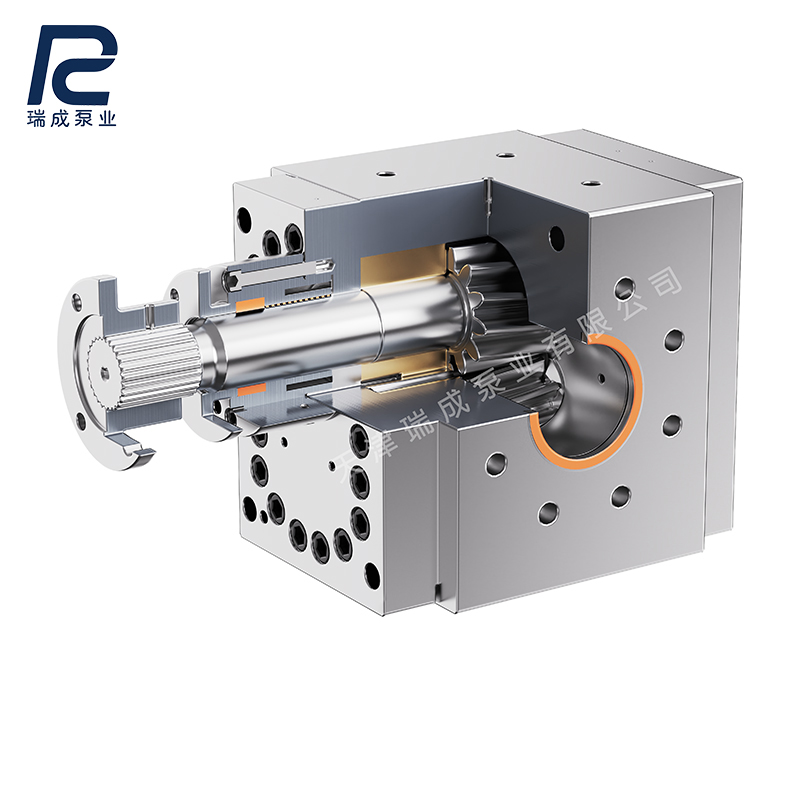
I. Main Causes
Lubrication failure is the most common contributing factor. Melt pumps rely on the polymer melt being transported to lubricate the bearings. When inlet pressure is too low, melt temperature is too low resulting in excessive viscosity, or the pump is not fully filled with material, a lubricating oil film cannot form, causing dry friction. This leads to a rapid rise in temperature and subsequent seizure. Inappropriate thermal expansion clearance is also a key factor: the pump is assembled at room temperature but operates at high temperatures. If the single-side bearing clearance is set too small, shaft expansion at high temperatures will directly crush the bearing. Additionally, hard foreign objects such as welding slag, rust, or unmelted material entering the pump chamber and becoming lodged in the minute gaps of gears or bearings can directly cause mechanical seizure. Improper installation and operation can also cause problems. For example, failing to perform hot alignment after cold alignment can result in misalignment of the coupling upon heating, generating additional torque; or starting the pump at high speed when it is not fully filled with material.
II. Preventive Measures
During the design and installation phase, the single-side bearing clearance must be strictly controlled between 0.10 and 0.15 mm. Hot alignment must be performed after the system has reached operating temperature to ensure proper fit between all components.
Regarding process operations, the pump body temperature must meet process requirements; cold starts are strictly prohibited. Additionally, positive inlet pressure must be maintained to prevent “starvation feeding.” During startup, follow the principles of no-load startup and gradual speed increase; only apply load after sufficient lubrication has reached all bearings.
During routine maintenance, filter screens should be replaced regularly to help improve melt cleanliness; closely monitor motor current and the pressure differential before and after the pump, and promptly investigate any sudden increases in pressure differential; also, regularly inspect bearing wear, and replace them promptly if wear approaches the specified limit.
III. Company and Product Introduction
Tianjin Ruicheng Pump Industry Co., Ltd. is a company specializing in the R&D and production of high-precision melt pumps, reactor bottom melt pumps, and other products. Its products are manufactured from high-strength alloy steel or high-temperature tool steel, undergo precision machining and heat treatment, and feature wear resistance, corrosion resistance, and a long expected service life under standard operating conditions. The melt pumps produced by the company are suitable for polymer extrusion production lines in the plastics, chemical fibers, rubber, and petroleum industries, and can be used for the conveyance and pressurization of various materials such as PET, PP, PE, PC, and ABS. Ruicheng Pump Industry provides end-to-end services ranging from product selection and installation to commissioning and after-sales maintenance. Should customers encounter issues such as shaft seizure or material leakage during operation, they may contact the company’s after-sales team for technical support. Selecting a manufacturer with a mature technical system and strong service capabilities to ensure quality control from the source is a critical step in preventing melt pump failures such as “seizure” or “shaft binding.”