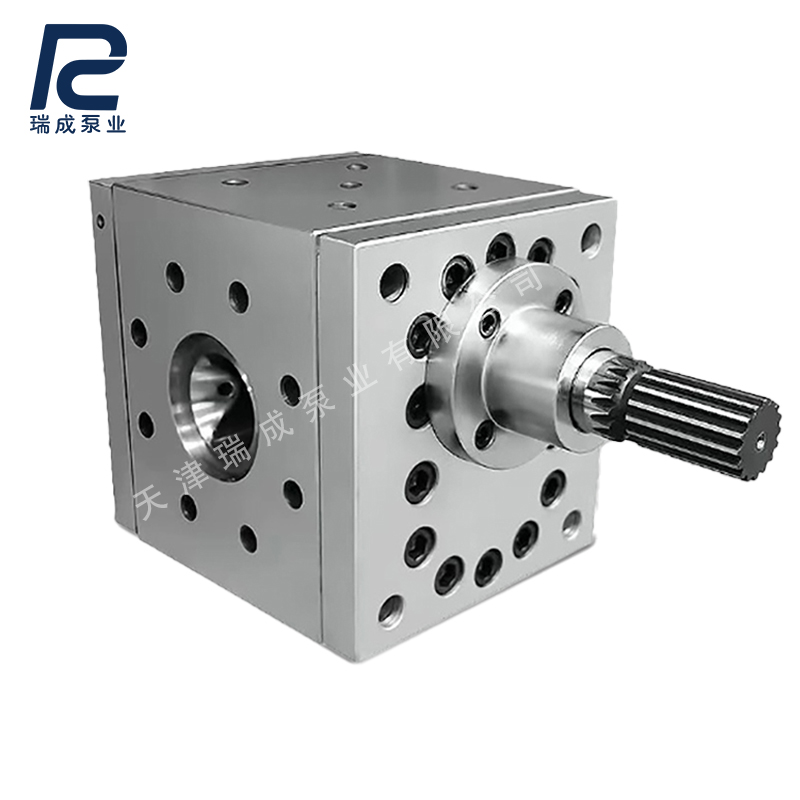
What does a melt pump do in PVC extrusion? Its main function is to pressurize and meter plasticized material, helping stabilize the melt supply to the die and support dimensional control in pipes, sheets, and profiles.
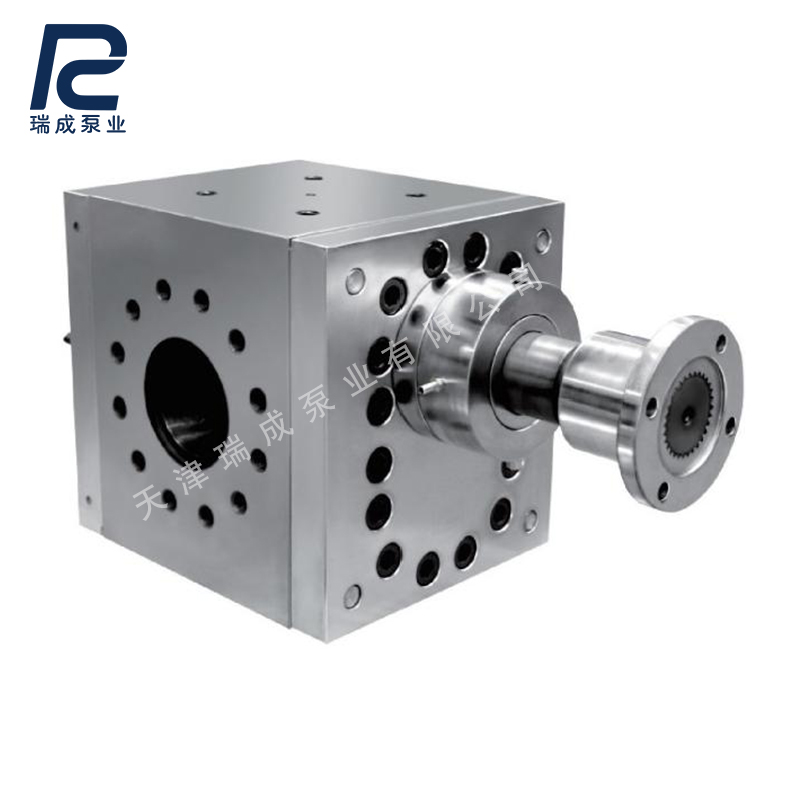
During production, uneven screw feeding and changes in material flow behavior can cause output fluctuations. When the amount of material entering the die varies, product thickness and dimensions may also change. Repeated adjustments to temperature and screw speed may not fully stabilize output, making it necessary to examine pressure and flow variations.
A melt pump continuously conveys material through rotating gears. With sufficient inlet feeding and properly plasticized material, its output can be adjusted by controlling pump speed. This helps reduce the effect of upstream fluctuations on die feeding and improve wall thickness and dimensional consistency where variations are caused by unstable flow.
With a melt pump installed, the pump takes over part of the pressure-building duty from the extruder, allowing screw operation to be adjusted with greater focus on plasticizing, mixing, and feeding. Whether this reduces processing temperature rise and energy consumption depends on the formulation, production rate, and operating conditions.
PVC is heat-sensitive, so pump selection should consider flow channel design, internal clearances, temperature control, and material residence time to help prevent localized overheating and material stagnation. During operation, extruder speed should be coordinated with pump inlet pressure. Increasing pump speed alone cannot compensate for insufficient feeding.
Tianjin Ruicheng Pump Industry Co., Ltd. selects melt pumps based on the PVC formulation, processing temperature, production rate, and inlet and outlet pressures, helping match the pump to the existing line and support continuous extrusion.