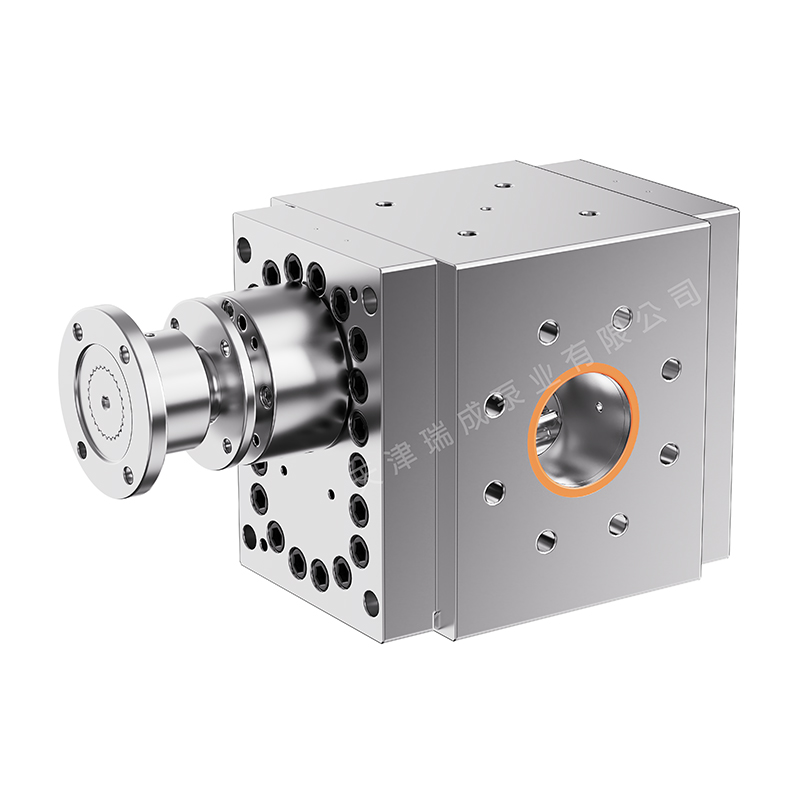
Profile extrusion lines require a high degree of stability in melt feeding. If the pressure or flow rate at the die inlet changes, the finished product may exhibit fluctuations in weight per meter, localized variations in wall thickness, surface ripples, and dimensional deviations.
When encountering such issues, one should not limit the inspection to the die and haul-off equipment alone. The extruder’s feed conditions, screw speed, barrel temperature, raw material batch, and screen resistance all affect die pressure. Installing a melt pump serves to make production more stable.
Ensuring a More Steady Feed to the Die
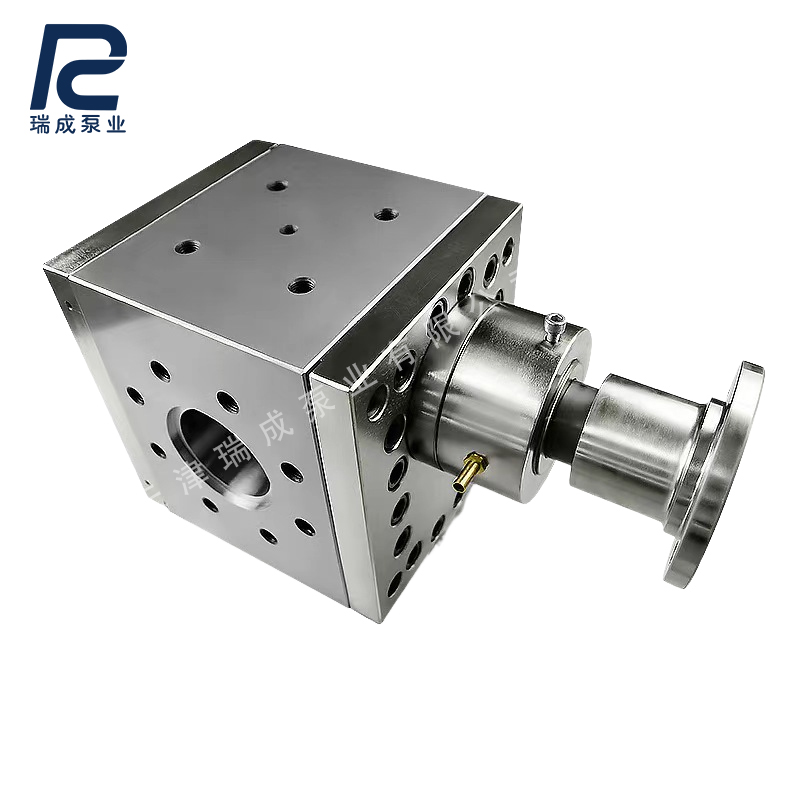
Melt pumps utilize a gear-type positive displacement delivery mechanism. As the gears rotate, the melt enters the gear pockets and is transported along the pump chamber to the outlet. When the material at the inlet is fully filled and at the appropriate temperature, the pump’s delivery rate is primarily determined by its displacement and rotational speed. By adjusting the pump speed via a variable-frequency drive, the output can be modified to meet production requirements.
When minor fluctuations generated by the extruder reach the melt pump’s inlet, the pump continues to deliver material at the set speed, thereby reducing the transmission of these fluctuations to the die. With a stable material supply upstream of the die, it becomes easier to maintain consistent flow across all channels. This is particularly significant for profiles with complex cross-sectional structures and thin wall thickness requirements.
Sharing the Pressure-Building Load of the Extruder
Without a melt pump, the screw must not only plastify and mix the material but also overcome resistance generated by the screen, connecting channels, and the die. As the screen gradually clogs or die resistance changes, the screw’s operating conditions also change accordingly.
Installing a melt pump clarifies the division of labor between the screw and the pump, reducing the impact of downstream resistance fluctuations on extruder operation.
Improved Control Over Parameters
After extrusion from the die, the profile undergoes shaping, cooling, drawing, and cutting. If the melt output does not match the drawing speed, the product’s cross-sectional area and weight per meter are prone to variation. A melt pump can control the delivery rate per unit time by adjusting its rotational speed; when coordinated with the haul-off speed, it provides more precise control parameters for production.
However, a melt pump cannot replace die adjustments. Profile dimensions are also influenced by actual operating conditions, such as die structure, shaping dies, and cooling water temperature. During actual commissioning, it is necessary to monitor the pump speed, die head pressure, and haul-off speed in conjunction.
Selection Should Not Be Based Solely on Output
When selecting a melt pump for a profile production line, it is necessary to understand the raw material type, processing temperature, melt viscosity, hourly output, inlet pressure, outlet pressure, die resistance, and fillers, among other factors, before determining the pump’s displacement, operating speed, drive power, sealing method, and heating configuration.
If the production line is also equipped with a screen changer, attention must be paid to the installation sequence of the screen changer and the melt pump, and inlet and outlet pressure monitoring must be set up. During operation, inlet material shortages, low-temperature starts, and dry running of the pump should be avoided. Tianjin Ruicheng Pump Industry can integrate the parameters of your existing profile production line to provide a complete system including the pump head, motor, gearbox, coupling, and control system, and assist with equipment installation and adjustment of operating parameters.