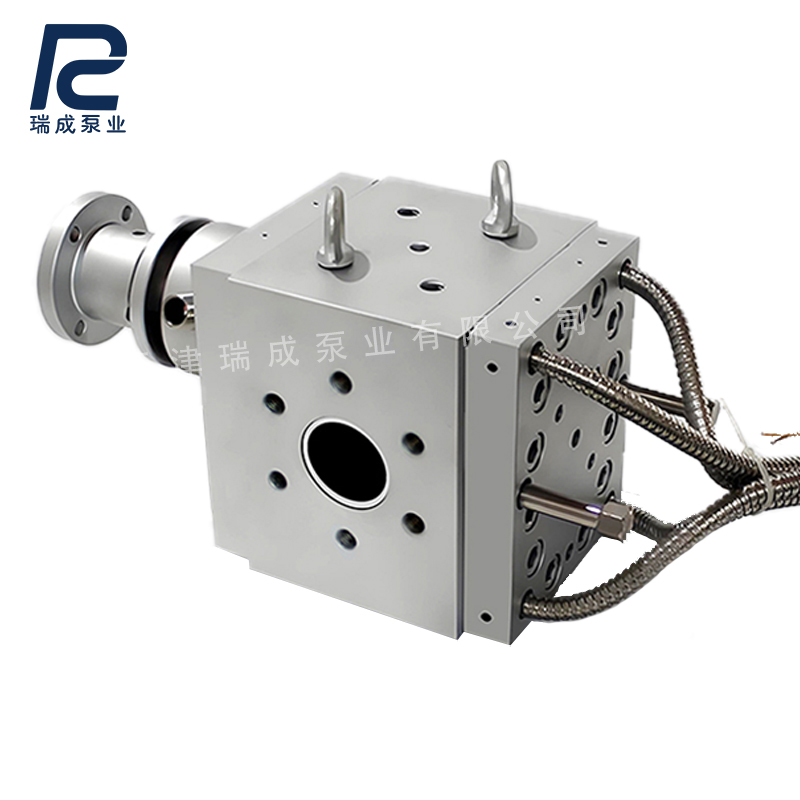
In film lamination production, resin materials such as PE, PP, and EVA are heated and plastified, then extruded through a die head to form a thin molten film layer, which is laminated onto paper, aluminum foil, nonwoven fabric, or other substrates. During production, the stability of melt flow rate and die pressure affects the thickness, transverse uniformity, lamination quality, and appearance of the finished product. A melt gear pump is typically installed between the extruder and the die, primarily responsible for maintaining stable pressure and flow rate, as well as ensuring metered delivery.
I. Reducing Extrusion Pressure Fluctuations
The extruder relies on screw rotation to feed, plasticize, and mix the raw materials. When changes occur in the particle size of the raw materials, screw speed, filtration resistance, or temperature, the outlet pressure of the extruder may fluctuate accordingly. Unstable pressure can easily cause variations in the thickness of the coating layer; in severe cases, it may also result in uneven edges or localized material shortages.
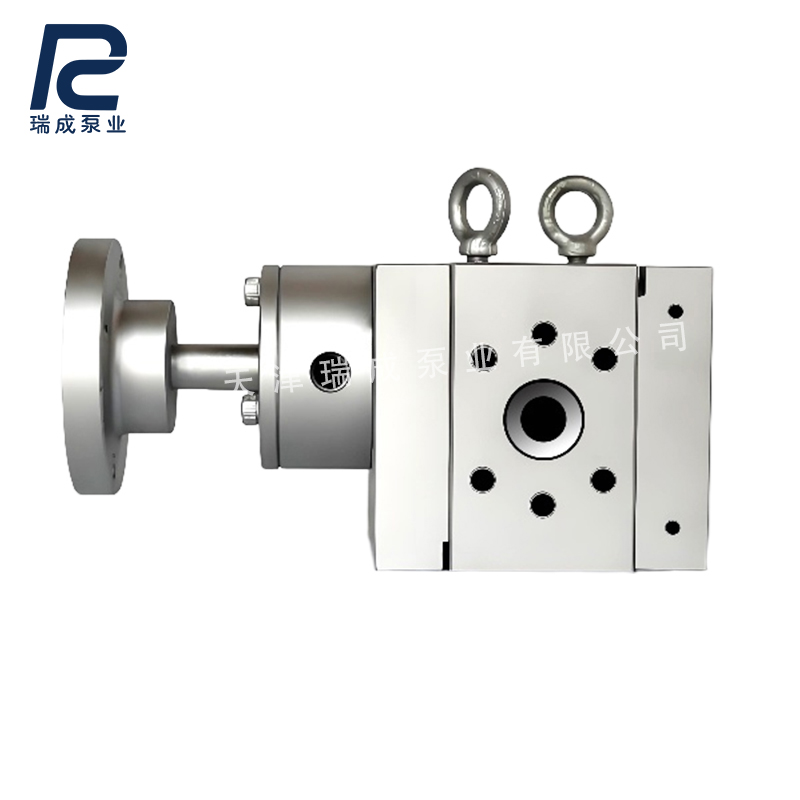
A melt gear pump uses a pair of continuously meshing gears to convey the melt from the inlet to the outlet. Its delivery volume per revolution is relatively stable, which helps mitigate the transmission of upstream extrusion fluctuations to the die head, thereby providing a more stable melt pressure for the subsequent film coating process.
II. Improving Film Coating Thickness Uniformity
Film-coated products typically have specific requirements for coating weight and thickness consistency. Fluctuations in feed rate can cause localized areas of the film layer to be too thick or too thin, which not only affects appearance but may also compromise barrier properties, moisture resistance, heat sealability, and lamination performance.
The output of a melt gear pump has a relatively stable relationship with its rotational speed. When combined with a variable-frequency drive and control system, the melt delivery rate can be adjusted according to production speed, ensuring a more continuous feed to the die and helping to control film layer thickness and coating weight per unit area.
III. Sharing the Pressure-Building Task of the Screw
Without a melt gear pump, the extruder screw must perform both plasticization and mixing while also handling the pressure-building task at the die. When the die gap is small or filtration resistance increases, the screw load may rise, and the shear and residence conditions of the material within the barrel will also change.
After installing a melt gear pump, the pump can take over part of the pressure-building and delivery work, allowing the screw to focus more on plasticizing and mixing the raw material. Properly adjusting the screw speed, pump speed, and temperature helps maintain a continuous extrusion process and reduces process fluctuations caused by load changes.
IV. Improving Control Over Process Adjustments
When changing raw materials, adjusting production speed, or modifying coating thickness on a film coating line, the extrusion output must be controlled accordingly. Melt gear pumps can regulate output through speed adjustment, providing a clear basis for parameter adjustments for different substrates, resins, and coating requirements.
In actual production, pressure sensors can also be installed upstream and downstream of the pump to coordinate screw speed and pump speed based on pressure changes, thereby preventing insufficient feed at the inlet or excessive pressure at the outlet. This allows operators to more intuitively monitor the melt delivery status, facilitating process adjustments.
V. What Parameters Should Be Considered During Selection?
When configuring a melt gear pump for a coating production line, selection should be based on the resin type, melt viscosity, processing temperature, production capacity, inlet pressure, outlet pressure, and die width. Additionally, the pump body material, heating method, sealing structure, and drive configuration must be taken into account.
A larger displacement does not necessarily mean a better fit for the pump. Excessive displacement combined with low rotational speed may limit the adjustment range; conversely, insufficient displacement during prolonged high-speed operation may increase wear and material shear. Therefore, displacement should be calculated based on production output and process data, while allowing for a reasonable operating range.
Tianjin Ruicheng Pump Industry can provide recommendations for selecting melt gear pumps and corresponding solutions based on the material characteristics and process parameters of the film coating production line. Through the proper configuration of the pump body, gearbox, motor, and pressure control components, we can provide relatively stable melt delivery conditions for the film coating extrusion process.