In the production process of plastic strapping, raw materials undergo heating, plasticization, filtration, extrusion, stretching, and shaping to ultimately form packaging materials with a certain level of strength and dimensional stability. As market demands for the appearance, tensile properties, and production stability of strapping continue to rise, product deviations caused by pressure fluctuations and flow variations in traditional extrusion systems have gradually drawn attention.
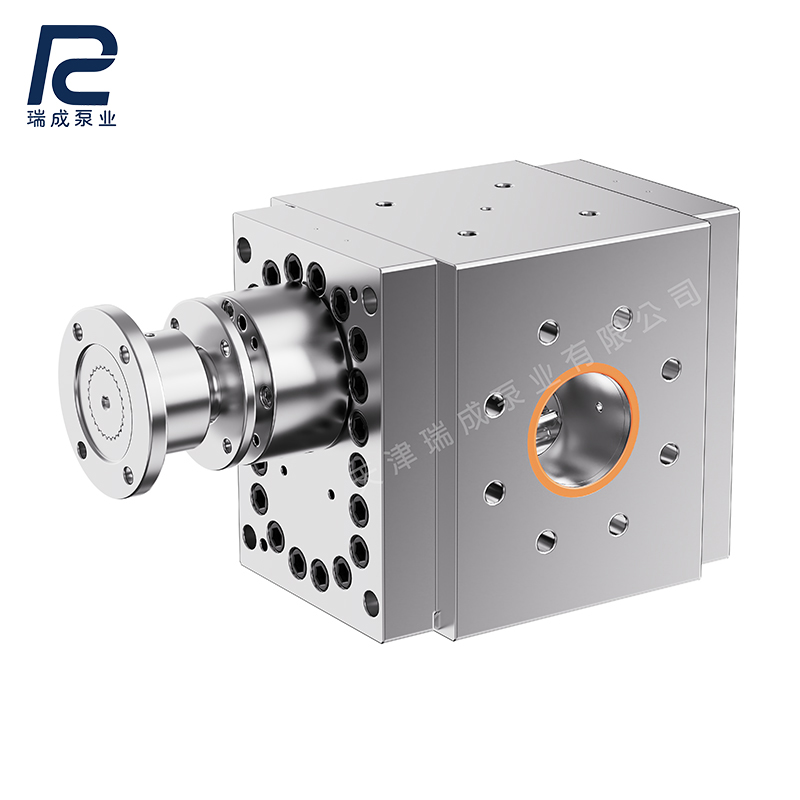
As high-precision conveying equipment installed between the extruder and the die head, melt pumps provide more stable process conditions for plastic strapping production by ensuring a steady melt flow, regulating pressure fluctuations, and controlling output flow rate.
I. Stabilizing Melt Flow Rate to Improve Strapping Dimensional Consistency
During the production of plastic strapping, the stability of the melt flow rate directly affects the product’s width, thickness, and cross-sectional uniformity.
In traditional extrusion processes, variations in screw speed, differences in raw material particle density, changes in filter system resistance, and temperature fluctuations can all lead to changes in melt pressure and flow rate. When melt supply is unstable, it can easily result in uneven strap thickness, surface texture variations, and frequent adjustments to production parameters.
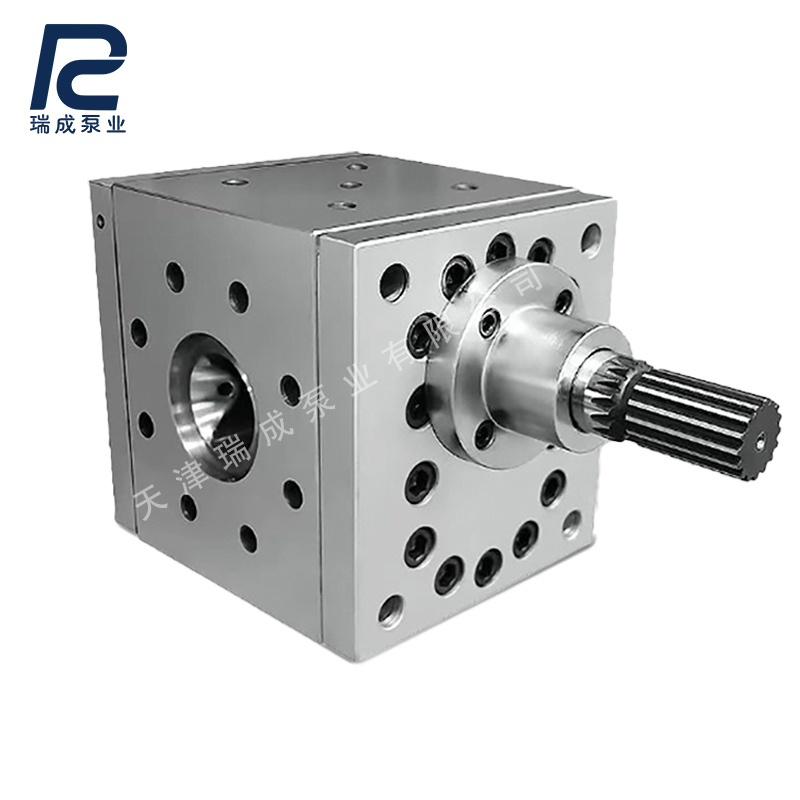
Melt pumps utilize a precision gear-meshing mechanism to deliver the melt continuously at a set flow rate through a fixed-displacement delivery method. By adjusting the pump’s operating speed, precise control over the melt delivery volume can be achieved, ensuring a more stable material supply to the die and providing reliable support for controlling the dimensions of the strapping.
For high-speed, continuous plastic strapping production lines, a stable melt supply helps reduce production adjustments caused by flow rate fluctuations and improves the continuity of the production process.
II. Isolating Pressure Fluctuations to Optimize Extrusion Process Stability
In actual production, the extruder primarily handles plasticization and melting, while the melt pump is responsible for the stable delivery and pressurization of the melt downstream.
Due to factors such as raw material conditions, screw conveying characteristics, and changes in the filtration system, the pressure at the extruder outlet may fluctuate to some extent. If these pressure changes are directly transmitted to the die, they will affect the extrusion output, causing variations in the strapping band forming process.
Installed downstream of the extruder, the melt pump utilizes its positive displacement characteristics to buffer upstream pressure fluctuations to a certain extent, while simultaneously providing a more stable pressure output downstream. Stable die pressure helps maintain uniform extrusion, ensuring smoother production line operation.
III. Reducing Equipment Load and Optimizing Production Energy Consumption
In production systems without a melt pump, the extruder must not only perform plasticization and melting but also shoulder a significant pressure-building load. When producing highly filled materials, recycled materials, or high-viscosity formulations, the operating pressure on the screw increases, and the equipment load rises accordingly.
With a melt pump installed, the extruder and the melt delivery functions can be reasonably divided. The extruder is primarily responsible for material plasticization and homogenization, while the melt pump handles stable delivery and pressure buildup, making the production process more efficient.
By optimizing equipment operating conditions, companies can improve production efficiency management and reduce repetitive adjustments and material waste caused by pressure fluctuations.
IV. Compatibility with Various Strapping Band Production Materials
Common materials used in plastic strapping band production include PP, PET, and recycled modified materials, among others. Different materials exhibit distinct flow characteristics in their molten state.
Ruicheng Pump Industry’s melt pumps are designed for the conveyance of high-temperature, high-viscosity polymer melts and can be tailored to different material properties, production capacities, pressure requirements, and installation methods.
Through appropriate model selection, these pumps can meet the flow rate, pressure, and temperature control requirements of various strapping band production lines, providing equipment support for stable production.
V. Ruicheng Pump Industry’s Melt Pumps Drive Strapping Band Production Upgrades
Tianjin Ruicheng Pump Industry’s melt pumps feature a precision gear design, combined with high-temperature compatibility, stable sealing, and heating/insulation systems, making them suitable for applications in plastic extrusion, modified pelletization, sheet production, film production, and strapping band manufacturing.
On strapping band production lines, melt pumps serve not only as conveying equipment but also play a critical role in stabilizing process parameters. By precisely controlling melt flow rate, improving pressure stability, and optimizing the material conveying process, they help manufacturers enhance product consistency while reducing material waste caused by process fluctuations.
As the plastics processing industry evolves toward higher efficiency and greater stability, melt pumps will play a vital role in more precision extrusion production lines, providing the strapping band industry with more reliable melt conveying solutions.