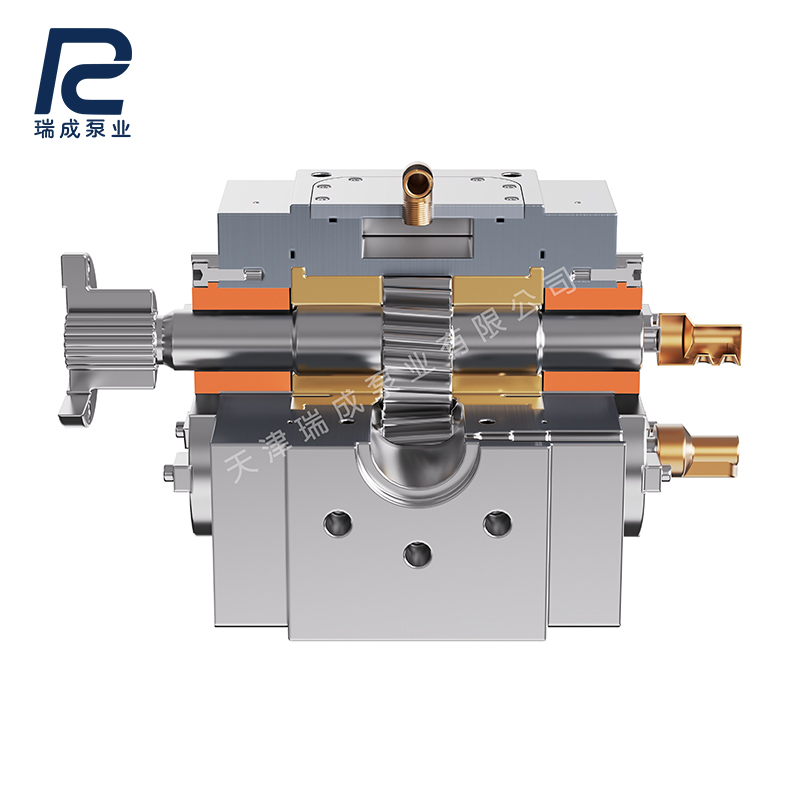
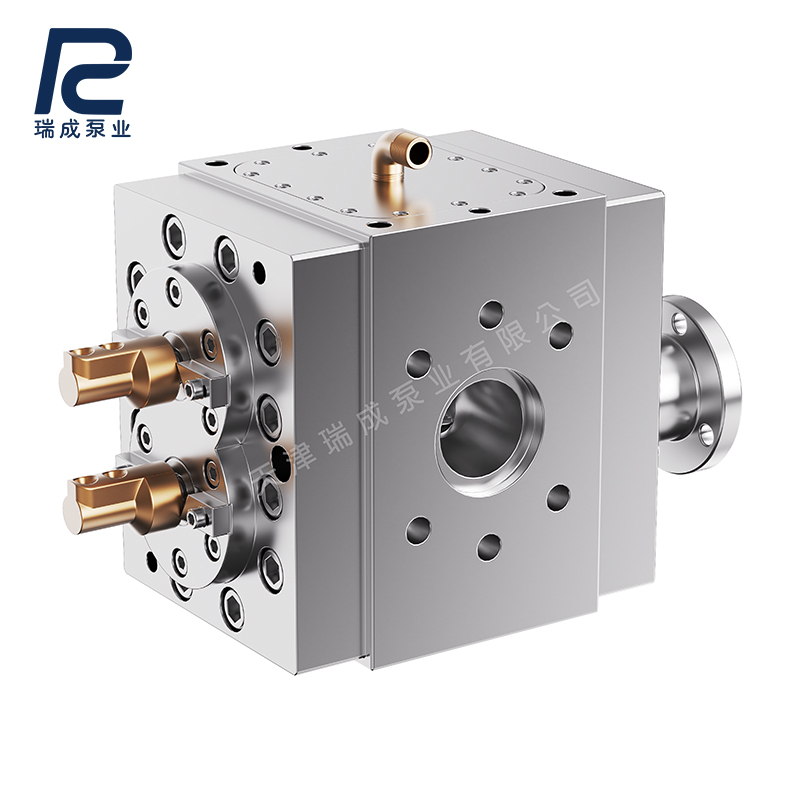
In rubber extrusion, calendering, molding, and continuous conveying processes, the material typically exhibits high viscosity, high elasticity, and significant flow resistance; some formulations also contain fillers such as carbon black and calcium carbonate. When handling such materials, conventional conveying equipment may experience intermittent feeding, fluctuations in outlet pressure, or localized material buildup. Rubber-specific melt gear pumps are designed to address the rheological properties of rubber materials and can be used for pressurization, pressure stabilization, and metered conveying in production lines.
I. Suitable for Conveying High-Viscosity Rubber
Rubber materials retain high viscosity even at processing temperatures, placing high demands on the pump housing strength, gear structure, shaft system load-bearing capacity, and drive torque. Specialized rubber melt gear pumps utilize a positive displacement conveying principle: once the material enters the gear teeth, it is continuously transported from the inlet side to the outlet side as the gears rotate.
Through the rational design of gear parameters, meshing clearance, and internal flow channels, material filling efficiency is improved, ineffective backflow is reduced, and the conveying process remains relatively continuous. For different rubber formulations, the gear structure and drive method can be configured accordingly based on material viscosity, filler ratio, and processing temperature.
II. Reducing Outlet Pressure Fluctuations
Changes in extruder screw speed, feeding conditions, material temperature, and formulations can all affect outlet pressure. When a gear pump is installed between the extruder and the die head or downstream equipment, it utilizes the gear’s positive displacement chambers to discharge material continuously, thereby reducing the direct impact of upstream feeding variations on downstream processes.
Relatively stable pressure and flow rates help improve the extrusion uniformity of products such as rubber hoses, cable sheathing, sealing strips, and tire components, and also facilitate the adjustment of process parameters on the production line. For rubber processing equipment requiring continuous production, stable material delivery can also minimize the impact of frequent adjustments to the extruder speed.
III. Reducing the Impact of Material Retention
Some rubber formulations are sensitive to temperature and residence time; prolonged localized material accumulation may cause scorching, premature vulcanization, or changes in performance. Specialized rubber melt gear pumps can optimize flow channel transitions, internal clearances, and inlet/outlet structures based on material characteristics to minimize areas prone to material buildup.
For rubber systems containing fillers or with poor flowability, a smooth flow channel design also helps reduce local resistance, facilitating equipment cleaning and material changeovers. At the same time, properly configured gear clearances and internal lubrication structures can reduce abnormal friction between components, supporting continuous equipment operation.
IV. Balancing Temperature Control and Metric Dosing
Rubber processing is highly sensitive to temperature fluctuations. The pump housing can be equipped with cooling structures tailored to process requirements, ensuring material is conveyed within an appropriate temperature range and minimizing the impact of localized temperature rises on seals, shaft assemblies, and the condition of the rubber.
When inlet feed is sufficient and the material condition is stable, the output flow rate can be controlled by adjusting the pump speed, providing stable material conditions for extrusion, calendering, coating, and metered feeding.
Tianjin Ruicheng Pump Industry can select and configure the design of specialized rubber melt gear pumps based on rubber type, filler ratio in the formulation, operating temperature, inlet and outlet pressures, target output, and installation space. In practical applications, factors such as material compressibility, system back pressure, continuous operating time, and maintenance conditions must also be comprehensively considered. Proper selection, standardized installation, and appropriate control of speed and temperature are essential for maintaining stable equipment operation.