In the production process of polymer materials such as resins, chemical fibers, and rubber, the reactor discharge process is directly related to the operation efficiency and product quality of the entire production line. As the core equipment of this link, the installation design and control technology of the bottom pump contain profound engineering considerations.
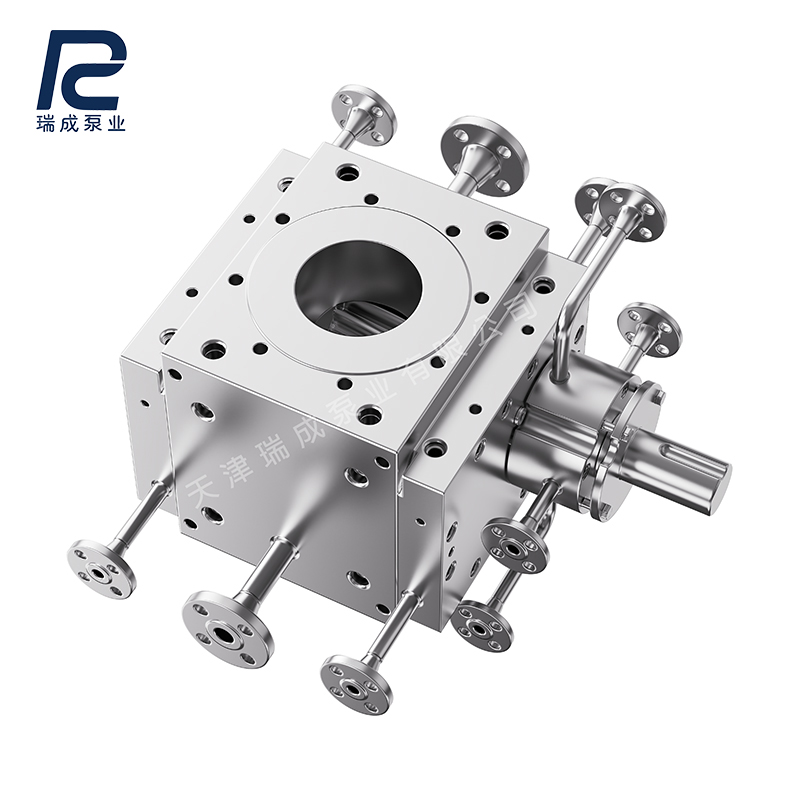
Installation Design: The engineering wisdom behind the compact layout
The bottom pump is usually installed directly at the bottom outlet of the reactor, and this layout makes full use of the principle of gravity artesian flow, so that the high-temperature melt can directly enter the pump inlet, effectively avoiding the problem of material cooling, degradation or blockage caused by long-distance pipeline transportation. For high-viscosity materials, this "bottom of the pot drawing" design minimizes flow resistance.
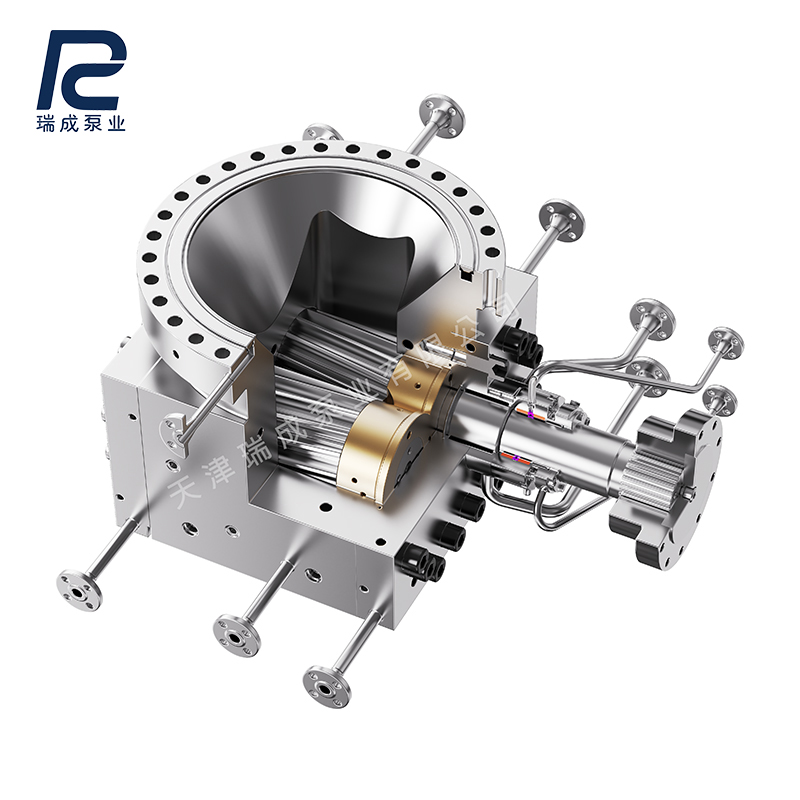
The drive system adopts the combination scheme of "motor + reducer + universal coupling": the motor and reducer provide low-speed and large torque output to meet the power requirements of high-viscosity melt transportation; The universal coupling allows for a certain degree of installation centering deviation, which is convenient for on-site installation and isolates vibration transmission, while greatly improving the convenience of routine maintenance.
Control advantages: from extensive conveying to precision metering
As a forced positive displacement pump, the output flow rate of the bottom pump is directly proportional to the rotational speed, which naturally gives it the potential for precise control. By adjusting the drive speed, the flow rate can be accurately adjusted, and it is upgraded from a simple "conveying equipment" to a core equipment with metering functions.
It is especially recommended to use frequency conversion speed regulation technology, which is reflected in three aspects: first, the flow output and the rotation speed show a nearly linear relationship, and the control is intuitive and repeatable; Secondly, the system is sensitive to response, and the output can be adjusted in milliseconds when the process conditions change, effectively avoiding pressure fluctuations. In addition, the frequency conversion speed regulation matches the energy consumption of the motor according to actual needs, avoiding the energy waste caused by traditional throttling methods.
When handling high-viscosity melts in high-temperature and high-pressure environments, this design not only improves conveying efficiency, but also greatly enhances control accuracy, providing a reliable guarantee for continuous and automated production.